
close
Choose Your Site
Global
Social Media


Views: 0 Author: Site Editor Publish Time: 2025-08-29 Origin: Site


Are you looking to elevate your embroidery business? Single head embroidery machines might be the solution you need. These machines are versatile and efficient, perfect for businesses focusing on quality and customization. In this post, you'll learn what a single head embroidery machine is and how it can benefit your business. Explore the key features and advantages that make these machines a must-have for embroidery entrepreneurs.
A single head embroidery machine is exactly what its name suggests: a machine with one embroidery head. This head stays fixed, while the embroidery arm moves to stitch the design onto fabric. These machines typically have between 7 and 15 needles, enabling them to use multiple thread colors without constant manual changes. They stitch quickly, usually between 300 and 1,200 stitches per minute, making them efficient for many projects.
Single head machines are compact , perfect for businesses with limited space or those just starting out. Their flexibility lets you work on various fabric types, from thick materials like denim to delicate textiles like silk.
Single head embroidery machines shine in projects that require detail and precision on one item at a time. They’re ideal for:
Custom Apparel: Personalizing t-shirts, polos, jackets, and hoodies with logos or text.
Caps and Hats: Adding embroidery to caps, beanies, or other headwear using specialized cap frames.
Corporate Wear: Creating uniforms or promotional apparel for companies.
Monogramming: Adding initials or small designs to bags, towels, linens, and baby clothes.
Home Décor: Decorating cushions, curtains, and other household textiles.
Small Batch Orders: Perfect for businesses handling limited runs or customized designs.
Because the machine focuses on one item at a time, it’s great for businesses that value quality over large-scale mass production. If your business deals with mixed media or multimedia styles, single head machines offer the versatility to handle those creative demands.
When choosing a single head embroidery machine, consider these features:
Number of Needles: More needles mean more colors stitched without stopping.
Embroidery Area: The maximum size your machine can stitch; larger areas handle bigger designs.
Speed: Faster stitching means quicker turnaround but balance speed with quality.
User Interface: Touchscreen panels make operation easy, even for beginners.
Software Compatibility: Ensure your machine works with design software you prefer.
By understanding these basics and project types, you can better match a machine to your business needs.
Tip: When selecting a single head embroidery machine, match the embroidery area and needle count to your typical project sizes and color complexity to maximize efficiency and output quality.
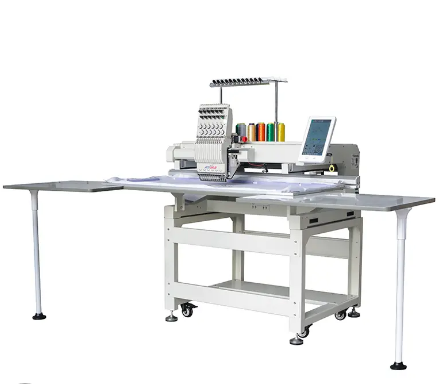
When buying a single head embroidery machine, output and capacity are crucial. These machines focus on one item at a time, so you won’t get the mass production speed of multi-head machines. However, they excel in quality and detail, perfect for custom or small batch work.
Consider how many pieces you need to produce daily or weekly. If your business handles orders with tight deadlines or large volumes, ensure the machine's speed and efficiency meet those demands. Most single head machines stitch between 300 and 1,500 stitches per minute. Faster machines help reduce production time but balance speed against stitch quality.
Capacity also means the machine’s ability to handle different garment types and sizes. Single head machines often support tubular embroidery, ideal for sleeves, caps, or bags. Check the maximum embroidery area — larger areas allow bigger designs and more flexibility. For example, some machines offer embroidery fields from about 200x200mm up to 400x600mm or more.
Think about your future growth, too. Choose a machine that can scale with your business needs, handling increased orders or more complex designs without frequent upgrades.
Customer satisfaction is a key success factor. A reliable single head embroidery machine ensures consistent, high-quality results that keep clients happy. Precision stitching, accurate color changes, and minimal thread breaks contribute to professional finishes.
Look for features that improve quality and reduce errors:
Automatic thread trimmers save time and give clean edges.
Thread break detection helps avoid ruined pieces.
Built-in bobbin winders keep thread supply steady.
Color change automation speeds up multicolor designs without manual intervention.
Machines with user-friendly interfaces and clear displays let operators monitor progress and troubleshoot quickly, reducing downtime and mistakes.
High-quality embroidery also builds your brand reputation, encouraging repeat business and referrals. Investing in a machine with strong quality assurance features pays off in satisfied customers and fewer costly remakes.
Tip: When selecting a single head embroidery machine, match its output speed and embroidery area to your typical order size and design complexity to maximize productivity and maintain top-notch quality.
Choosing a single head embroidery machine involves balancing cost against your business needs. Prices typically range from around £4,995 to £13,995 plus VAT, depending on features and brand. For startups or small businesses, it’s crucial to pick a machine that fits your budget but still offers room for growth.
Keep in mind, the initial price isn’t the only expense. Factor in ongoing costs like maintenance, thread, needles, software updates, and energy consumption. Investing in a reliable machine upfront can save money on repairs and downtime later.
If you’re just starting, a mid-range machine with essential features might be ideal. As your business expands, you can upgrade to models with higher speeds, larger embroidery areas, or more needles.
Look for machines that are easy to operate and match your production style. A touchscreen interface simplifies control, letting you quickly select designs or adjust settings. Wireless connectivity adds convenience, allowing you to transfer designs without cables cluttering your workspace.
Performance-wise, consider:
Number of Needles: More needles mean more thread colors stitched automatically. Machines usually have between 7 and 15 needles.
Stitching Speed: Faster machines (up to 1,500 stitches per minute) reduce production time but balance speed with stitch quality.
Embroidery Area: Choose a machine with a hoop size that fits your typical design dimensions. Larger areas handle bigger projects.
Automatic Features: Thread trimmers, color change automation, and thread break detection reduce errors and speed up work.
Memory Capacity: Machines with larger memory store more designs and stitches, saving time reloading files.
Think about your common projects. If you often embroider caps or sleeves, ensure the machine supports tubular embroidery and offers suitable cap frames.
Match machine features to your product types and order volume.
Prioritize user-friendly controls to reduce training time.
Check software compatibility with your design tools.
Consider machine size and weight if space or portability matters.
Don’t sacrifice quality for cost; reliable stitching builds customer trust.
The Happy Japan HCU series stands out as one of the fastest and most advanced single head embroidery machines available. It’s perfect for startups and growing businesses aiming to boost productivity without sacrificing quality.
Key features include:
Wireless Connection: Completely cable-free operation, allowing a portable workspace.
Needles/Colors: 15 needles, supporting complex multi-color designs.
Speed: Maximum stitching speed of 1,500 stitches per minute (SPM), one of the fastest in its class.
Embroidery Area: Large tubular embroidery area of 400x600mm, with an option for 400x1200mm for bigger projects.
Cap Frames: Optional low-profile (67x180mm) and wide cap frame (67x290mm) for headwear.
User Interface: Colour LCD touchscreen for easy control.
Automatic Functions: Thread trimmer, colour change, and thread break detection to reduce errors and save time.
Memory: Can store up to 40 million stitches or 999 patterns.
Additional Perks: Built-in bobbin winder, short stitch sweep function, and customizable icon locations.
This machine balances speed, capacity, and advanced features, making it ideal for businesses wanting to scale efficiently.
Several other brands offer competitive single head embroidery machines. Here’s how they compare:
| Brand | Model | Needles/Colors | Speed (SPM) | Embroidery Area (mm) | Approximate Price (£) | Notes |
|---|---|---|---|---|---|---|
| Brother | PR680W | 6 | 1,000 | 300x200 | £6,495* | Reliable, user-friendly, mid-range price |
| Ricoma | EM1010 | 10 | 1,000 | 310x210 | £7,920 | Good needle count, solid build |
| SWF | MAS 12 | 6, 9, 12 | 1,000 | 360x230 | N/A | Versatile needle options, larger area |
| Happy Japan | HCS3 | 12 | 1,000 | 285x290 | £7,995* | Compact, touchscreen interface |
| Brother | PR1055X | 10 | 1,000 | 360x200 | £9,999* | Professional features, larger area |
| Tajima | TMBP-SC Series | 6, 12, 15 | 1,200 | 360x500 | N/A | Industry leader, high speed and area |
| Happy Japan | HCD3 | 15 | 1,200 | 400x520 | £11,995* | Larger area, high needle count |
| Happy Japan | HCU | 15 | 1,500 | 400x600 | £13,495* | Top-tier speed, advanced features |
Prices may vary; check with suppliers for current pricing.
Brother PR680W: A solid choice for those needing a dependable machine with moderate speed and needle count. It’s user-friendly, suitable for small to medium projects.
Ricoma EM1010: Offers a higher needle count, making it great for multi-color embroidery. It has a reliable build quality.
SWF MAS 12: Provides flexibility with needle options and a larger embroidery area, fitting for businesses needing variety.
Happy Japan HCS3: A more compact and portable option than the HCU series, ideal for smaller spaces or mobile setups.
Tajima TMBP-SC Series: Known for durability and speed, Tajima is a premium brand favored by high-volume producers.
Happy Japan HCD3: Balances speed and embroidery area, perfect for businesses needing larger designs.
When deciding among these machines, consider:
Production Volume: Higher speed and larger embroidery areas suit bigger orders.
Design Complexity: More needles allow for intricate, multi-color designs without manual thread changes.
Workspace Size: Compact machines like the Happy Japan HCS3 are excellent for limited spaces.
Budget: Prices vary widely; balance features against your budget and growth plans.
Portability: Wireless models like Happy Japan’s HCU series offer mobility advantages.
Investing in a machine that aligns with your business goals ensures efficiency, quality, and customer satisfaction.
Tip: Test machines if possible; hands-on experience reveals which model fits your workflow, workspace, and design needs best
Keeping your single head embroidery machine in top shape ensures smooth operation and high-quality embroidery. Regular maintenance prevents breakdowns and costly repairs. Here’s what you should focus on:
Clean the Machine Daily: Dust, lint, and thread bits gather around the needle area, bobbin case, and thread paths. Use a soft brush or compressed air to clear these out after each workday.
Oil Moving Parts: Follow the manufacturer’s instructions to lubricate key components like the needle bar, hook, and rotary parts. Proper oiling reduces friction and wear.
Check and Replace Needles: Needles dull or bend over time. Change them regularly to avoid skipped stitches or fabric damage. For heavy fabrics, use needles designed for thicker materials.
Inspect Thread Paths: Make sure threads run smoothly without snagging. Replace any worn or damaged thread guides and tension discs.
Bobbin Care: Clean the bobbin case and check bobbin tension. Replace bobbins if they’re cracked or worn.
Update Software: Keep your machine’s firmware and software up to date. Updates often fix bugs and add useful features.
Store Properly: When not in use, cover your machine to protect it from dust. Keep it in a stable environment, avoiding extreme temperatures or humidity.
Regular checks not only extend your machine’s life but also keep your embroidery consistent and professional.
Even with good maintenance, issues can arise. Here are common problems and how to fix them:
Thread Breaks Frequently: Check thread quality and tension. Replace old or cheap thread. Make sure the needle size matches the fabric. Clean thread paths for smooth flow.
Skipped Stitches: Replace the needle and verify it’s inserted correctly. Check if the fabric is hooped tightly. Adjust thread tension if needed.
Poor Stitch Quality: Clean the bobbin area and oil moving parts. Use the right stabilizer for your fabric. Make sure the design is digitized properly.
Machine Jams or Stops: Remove any tangled threads from the hook or bobbin area. Restart the machine and check for error messages. Consult the user manual for specific codes.
Design Misalignment: Ensure the fabric is hooped straight and tight. Use the machine’s alignment tools like laser guides or positioning marks.
Unresponsive Touch Screen: Restart the machine. Check connections if applicable. If the problem persists, contact technical support.
Keeping a troubleshooting checklist handy saves time and reduces downtime.
Single head embroidery machines open doors to more than just stitching designs. You can expand your business by adding related services that complement embroidery. Here are some ideas:
Screen Printing: Combine embroidery with screen printing to offer diverse apparel decoration options.
Heat Transfer Vinyl (HTV): Use HTV for custom designs on fabrics where embroidery isn't ideal.
Digitizing Services: Offer to convert customer artwork into embroidery-ready designs.
Monogramming & Personalization: Provide personalized initials or names on items like towels, bags, or uniforms.
Patch Making: Create embroidered patches for clubs, teams, or brands.
Custom Gifts: Expand into embroidered home décor, baby clothes, or promotional items.
Adding these services attracts a broader client base and increases revenue streams. It also positions your business as a one-stop shop for custom apparel and merchandise.
Growing your embroidery business requires smart marketing and building strong connections. Here’s how to leverage your single head machine effectively:
Showcase Your Work: Use social media platforms like Instagram and Facebook to post photos and videos of your embroidery projects. Highlight unique designs and quality.
Website & Online Store: Create a user-friendly website where customers can browse products, request quotes, or place orders.
Local Partnerships: Collaborate with local businesses, schools, or sports teams. Offer group discounts or sponsorship deals.
Attend Trade Shows & Events: Exhibit at craft fairs or business expos to meet potential clients and display your capabilities.
Customer Referrals: Encourage satisfied customers to refer friends through loyalty programs or discounts.
Email Marketing: Send newsletters with new product launches, promotions, or helpful embroidery tips.
Offer Samples: Provide free or discounted samples to potential clients to demonstrate your quality and service.
Networking also means connecting with suppliers, other embroidery professionals, and industry groups. These relationships can lead to shared knowledge, bulk discounts, or joint projects.
Single head embroidery machines are ideal for detailed, small-batch projects. They offer flexibility, portability, and quality. Key features to consider include needle count, embroidery area, and speed. These machines are perfect for custom apparel, caps, and home décor. For a reliable and efficient option, consider products from Zhuji Qihong Electro-Mechanical Co., Ltd.. Their machines provide excellent value with advanced features, ensuring high-quality results and customer satisfaction. Investing in a suitable machine enhances productivity and business growth.
A: A Single Head Embroidery Machine features one embroidery head, ideal for detailed, custom projects on various fabrics.
A: It uses multiple needles to stitch designs onto fabric, with the embroidery arm moving to create patterns.
A: It's perfect for quality-focused, small-batch custom embroidery projects, offering versatility and precision.
A: Prices range from £4,995 to £13,995 plus VAT, depending on features and brand.


