
close
Choose Your Site
Global
Social Media


Views: 0 Author: Site Editor Publish Time: 2026-03-09 Origin: Site


Launching or expanding an embroidery business often begins with one practical question: how much should you expect to invest in equipment? For companies planning to produce custom caps or branded headwear, understanding hat embroidery machine cost is an important first step. The price of a machine is not simply a number listed on a quotation sheet. It reflects production capacity, technology, stability, configuration options, and the level of support available after purchase. Buyers who evaluate cost from this broader perspective are usually able to select equipment that performs reliably and supports long-term business growth.
A hat embroidery machine is designed specifically for stitching designs on curved surfaces such as baseball caps and promotional hats. Because cap embroidery involves unique technical requirements, machines built for this application often include specialized frames, needle configurations, and control systems. For buyers comparing equipment options, understanding how these elements influence cost can help clarify what they are really paying for and why certain machines offer better value in real production environments.
Many first-time buyers assume the cost of a hat embroidery machine is simply the price of the equipment itself. In practice, the investment usually includes several layers of expenses that contribute to the machine’s ability to perform efficiently and consistently.
The listed machine price represents the base investment for the equipment. However, the startup cost of operating a hat embroidery system may also include accessories such as cap frames, embroidery software, thread sets, stabilizers, and operator training. These additional elements help ensure the machine can start producing professional-quality embroidery immediately.
A business that evaluates total startup cost rather than only the machine price often avoids delays or operational issues during the early production stage. Proper preparation helps maintain consistent embroidery quality and protects the overall investment.
Entry-level embroidery machines are usually designed for smaller operations, hobby users, or low production volumes. Commercial hat embroidery machines, on the other hand, are engineered for continuous operation, higher speeds, and greater durability. The difference in cost often reflects stronger mechanical structures, more advanced control systems, and higher stitching efficiency.
Commercial machines may also support larger production schedules, making them suitable for companies handling corporate orders, uniform programs, or promotional merchandise.
Budget is naturally an important consideration, but a machine should also match the intended production scenario. A startup business producing small custom orders may prioritize flexibility and manageable investment, while a larger embroidery workshop may focus on speed, automation, and long-term reliability.
Thinking about real usage helps ensure that the machine chosen delivers the best balance between cost and operational capability.
Several technical factors influence how a hat embroidery machine is priced. Understanding these factors allows buyers to evaluate different models more effectively.
The number of needles determines how many thread colors can be loaded simultaneously. Machines with more needles can switch colors automatically without frequent manual adjustments. This feature can significantly improve efficiency when working with complex logos or multi-color designs.
More needles typically mean a higher machine cost, but they also reduce downtime and increase productivity during large orders.
Single-head machines are widely used by small businesses and custom embroidery studios. They offer flexibility for sampling, personalized orders, and limited production runs.
Multi-head machines are designed for larger production environments where multiple items must be embroidered at the same time. While the initial cost of multi-head machines is higher, the productivity increase can make them a practical investment for businesses handling bulk orders.
Hat embroidery requires specialized cap frames that secure the hat and allow the machine to stitch along the curved surface. High-quality cap frames improve design alignment and help maintain consistent stitching results.
Advanced control systems also influence machine price. Computerized embroidery systems allow users to input, edit, and store complex embroidery patterns, improving accuracy and production efficiency.
Machine speed is another factor influencing cost. Faster machines can complete embroidery designs more quickly, which is beneficial for businesses producing large quantities of hats.
However, speed alone is not enough. Stability and structural quality ensure the machine can operate smoothly at higher speeds without affecting stitch accuracy. Machines built with durable frames and precise mechanical components tend to have higher upfront costs but offer better long-term performance.
Lower equipment prices may initially appear attractive, but extremely low-cost machines sometimes introduce hidden expenses that affect productivity and quality.
Cap embroidery differs from flat embroidery because the surface is curved and structured. The machine must guide the needle and thread along a curved path while maintaining consistent tension and stitch alignment.
Machines designed specifically for cap embroidery include features that support this complex process. Without these capabilities, the operator may struggle to achieve clean and stable embroidery results.
Machines with limited speed or stability can slow down production, especially when handling larger orders. Errors such as thread breaks, misalignment, or uneven stitching may occur more frequently.
Correcting these issues consumes time and materials, increasing operational costs beyond the initial machine price.
Reliable technical support and available spare parts are important elements of machine ownership. Businesses that receive clear training and responsive assistance can solve operational issues quickly and maintain consistent production schedules.
Equipment suppliers that provide long-term support often deliver greater value, even if the initial purchase price is slightly higher.
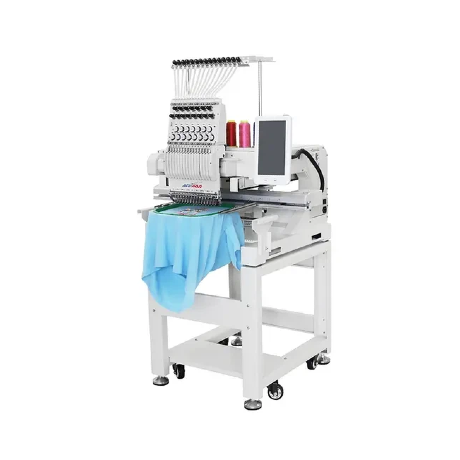
Different embroidery businesses operate with varying goals, production volumes, and budgets. Understanding how price ranges correspond to different business models can simplify the decision-making process.
Small embroidery studios often focus on personalized orders, small batch production, or creative design work. For these businesses, a single-head hat embroidery machine provides flexibility while keeping investment manageable.
These machines allow operators to experiment with different cap styles and embroidery designs without requiring large production capacity.
Companies producing promotional merchandise frequently handle larger orders of branded caps. Efficiency becomes important in these situations because multiple items must be embroidered quickly and consistently.
Machines with higher needle counts or faster stitching speeds can improve productivity and help businesses meet delivery deadlines.
Large embroidery factories typically work with bulk orders for apparel brands, sports teams, or corporate clients. Multi-head embroidery machines may be the most practical solution for these environments.
The higher cost of multi-head equipment is offset by the ability to produce multiple caps simultaneously, significantly increasing output.
Buyer Type | Typical Machine Level | Main Features Needed | Budget Range | Best Business Goal |
Startup embroidery studio | Single-head machine | Flexible operation, moderate needle count | Moderate | Build customer base |
Custom design workshop | Single-head advanced machine | Multiple needle colors, good control system | Medium | Handle custom orders |
Promotional product supplier | High-speed machine | Fast stitching, stable frame | Medium to high | Produce larger batches |
Large embroidery factory | Multi-head machine | Simultaneous embroidery capability | High | Large-scale production |
Cost should always be evaluated together with the potential return generated by the machine.
Custom embroidered caps are widely used for corporate branding, sports teams, retail merchandise, and promotional events. Each completed order contributes revenue that gradually offsets the equipment investment.
Businesses producing consistent orders often recover machine costs within a relatively short period.
Machines with multiple needles allow automatic thread color changes. This reduces manual intervention and speeds up production for complex designs.
Improved efficiency translates into lower labor requirements and higher output capacity.
Some embroidery machines are capable of handling multiple types of embroidery work. Businesses that can produce both caps and other embroidered items gain greater flexibility when responding to customer demand.
Versatile equipment allows companies to expand service offerings and attract new clients.
REVHON produces a wide range of computerized embroidery machines designed to support different production needs. These machines combine precise control systems, stable mechanical structures, and efficient stitching capabilities.
The company’s product portfolio includes high-speed embroidery machines, towel embroidery machines, flat embroidery machines, and single-head embroidery machines. This variety allows embroidery businesses to select equipment that matches their production scale and application requirements.
Hat embroidery machines produced by the company are engineered to deliver accurate stitching and reliable operation. The machines are designed to handle complex patterns and multiple thread colors while maintaining smooth performance.
Businesses that plan to expand into both cap embroidery and other textile embroidery applications often benefit from equipment that offers versatility and adaptability. Machines designed with flexible configurations help companies grow their production capacity without replacing equipment frequently.
For buyers interested in expanding embroidery services or increasing efficiency, professional embroidery machines can provide a solid foundation for long-term production success.
Understanding hat embroidery machine cost requires more than comparing equipment prices. The true value of a machine depends on its production capability, stability, efficiency, and long-term reliability. When businesses evaluate these factors together, they can choose equipment that supports their production goals and improves overall efficiency.
A well-designed cap embroidery machine price investment should align with the company’s order volume, embroidery complexity, and future growth plans. Businesses that select equipment based on these considerations are more likely to achieve consistent quality and sustainable productivity.
If your company is exploring embroidery equipment for cap production or expanding existing operations, professional embroidery machines from REVHON. can provide reliable solutions for modern embroidery businesses.
For more information about our embroidery machines or to discuss your production requirements, contact our team today. We welcome inquiries and look forward to supporting your embroidery projects.
The most important factors include the number of needles, machine speed, mechanical stability, cap frame quality, and the overall production capacity of the machine. These elements determine both the price and the efficiency of the equipment.
Yes. Many small embroidery studios begin with a single-head machine because it provides flexibility for custom orders and moderate production volumes.
Commercial machines are built for continuous operation, higher stitching speeds, and long-term durability. These features improve productivity and reduce downtime in professional production environments.
Some machines can handle multiple embroidery applications when equipped with appropriate frames and accessories. Businesses often choose versatile machines to expand their product offerings.


