
close
Choose Your Site
Global
Social Media


Views: 0 Author: Site Editor Publish Time: 2025-10-24 Origin: Site


3D embroidery has become one of the most eye-catching techniques in modern garment decoration, adding texture, depth, and dimension that standard flat embroidery cannot achieve. The secret behind professional 3D results lies in two things: precise digitizing and the advanced mechanical features of a 3D embroidery machine. At Zhuji Qihong Electro-Mechanical Co., Ltd., we specialize in high-performance computerized embroidery machines designed to deliver superior puff embroidery on caps, garments, and accessories, ensuring every design stands out with clean contours and durable raised stitching. Our focus on innovation allows businesses to produce creative, high-value embroidered goods efficiently, making 3D embroidery accessible to both small studios and industrial-scale manufacturers.
3D embroidery is not just a mechanical process — it starts long before the machine begins to stitch. To achieve that elevated, foam-filled look, the workflow integrates digital design, material setup, and machine-specific parameters that bring the artwork to life.
Before any thread touches fabric, the design must be digitized specifically for 3D or “puff” embroidery. Traditional embroidery files will not automatically produce a raised effect. During the digitizing process, special stitch types and underlay structures are added to compensate for foam thickness and to create strong edges that seal the design. The embroidery designer adjusts the stitch density and direction to ensure the foam beneath the thread is cut cleanly by the needle during stitching.
A professional digitizer will leave small gaps or use capping stitches to cover open areas where foam could otherwise protrude. Satin stitches are most commonly used for 3D embroidery because they form smooth, continuous surfaces that compress the foam evenly. This stage determines whether the final product looks crisp or uneven, which is why accurate digitizing software and experience are essential for any puff design.
Computerized embroidery machines rely on specific file formats that translate digital artwork into machine-readable stitching paths. Common formats include DST, PES, EXP, and others, each compatible with different software platforms and machine models. Zhuji Qihong’s computerized embroidery machines support major commercial file types, making it easy to import designs from professional digitizing software such as Wilcom or Tajima DG.
Once the file is loaded, the control panel allows users to preview, resize, and fine-tune the design without distorting its dimensional characteristics. Advanced systems also allow for stitch simulation and density adjustment, ensuring that the design remains optimized for foam thickness and fabric type. These compatibility features save time and prevent costly trial-and-error steps, which is particularly valuable for bulk production runs.
3D embroidery requires precision mechanics. A machine that is not designed for puff embroidery may struggle with foam displacement, uneven stitching, or broken threads. That’s why advanced features in a computerized embroidery machine play a decisive role in the final quality.
Raised embroidery requires more vertical clearance between the presser foot and the needle plate. This space allows the needle to penetrate both the foam and fabric layers without crushing the design. Zhuji Qihong’s embroidery machines are equipped with adjustable head-lift systems and extended needle clearance, ensuring smooth operation even with thick foam or multilayered materials.
These features prevent friction, reduce foam tearing, and maintain consistent thread tension — all of which are vital for producing professional puff effects. In addition, the robust drive structure ensures long-term accuracy even after extended production, reducing maintenance needs and downtime.
Most 3D embroidery projects are done on caps, jackets, or structured fabrics that require curved surfaces. The cap driver and specialized hoop systems on Qihong’s machines ensure accurate positioning and tight stabilization during high-speed operation. The rotating cap frame follows the curve of the cap brim, allowing the needle to maintain a consistent distance and angle, which helps achieve clean, uniform raised stitching even at the edges of the design.
For flat or tubular materials, interchangeable frames and adjustable tension controls allow seamless transitions between product types, saving setup time and improving production flexibility. This modular design approach also makes the machine ideal for diversified orders, helping embroidery businesses expand their product range easily.
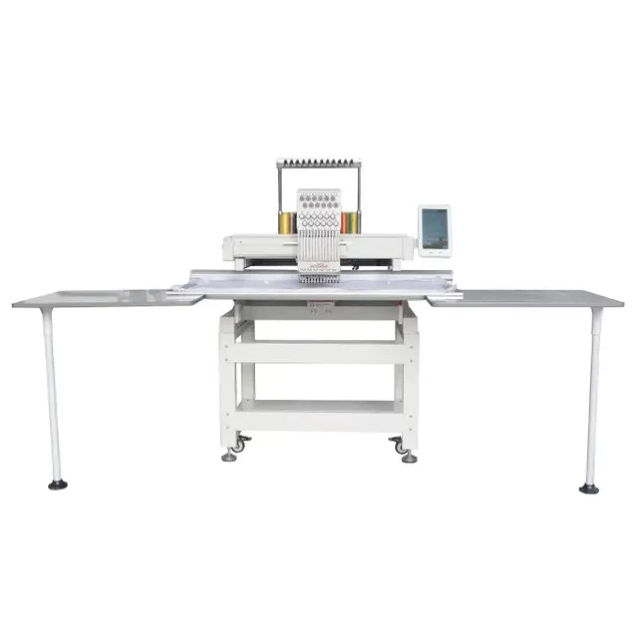
In commercial production, multiple heads must work simultaneously without variation. Our multi-head computerized embroidery machines are synchronized through an intelligent servo control system that ensures every head moves and stitches in perfect harmony. Automatic thread tension adjustment compensates for foam resistance and material stretch, delivering uniform puff height across all items in a production run.
This synchronization not only improves efficiency but also eliminates rework caused by misalignment or inconsistent stitching density. For manufacturers handling thousands of logos or patches daily, this feature is key to maintaining consistent quality and minimizing thread waste.
3D embroidery is all about precision in handling materials. The foam used, stabilizers, needles, and threads must be carefully matched to both the design and the machine’s capabilities.
Common puff embroidery foam is made from EVA or polyurethane, available in different thicknesses depending on the desired 3D height. Qihong’s machines handle various foam types with ease thanks to their adjustable presser foot system and reinforced needle drive. Specialized sharp-point needles are used to slice through the foam cleanly without pulling or tearing.
Thread selection is also critical — polyester threads are preferred for their strength and sheen, while rayon threads provide softer texture. Stabilizers placed beneath the fabric prevent puckering and help the stitches form consistently. The combination of quality materials and an advanced machine structure ensures that even complex 3D patterns maintain durability and precision.
Even with the best materials, 3D embroidery can face challenges such as foam blowout, density imbalance, or puckering. However, modern 3D embroidery machines and software systems offer solutions that minimize these issues.
Foam Blowout: Occurs when the foam is not properly covered. Adjusting stitch density or using a top stitch layer that seals the edges prevents this.
Puckering: Often caused by excessive tension or inadequate stabilization.
Density Problems: Overly tight stitch spacing can crush the foam, while loose spacing leads to visible gaps. Digitizing software with 3D simulation tools helps optimize the density before stitching begins.
Thread Breaks: High-speed sewing over foam can stress threads. Our computerized systems feature thread-break sensors and automatic trim recovery, keeping production efficient and continuous.
In addition, automatic color-change functions and built-in memory storage make it easy to switch designs or materials without interrupting workflow. These intelligent features reflect how digital technology and mechanical precision combine to simplify complex embroidery tasks.
Creating a puff-embroidered logo on a cap involves both preparation and precision. Here’s how a typical workflow unfolds on a professional computerized embroidery machine:
Digitize for Foam – The logo is designed using embroidery software, with satin stitches and underlay optimized for foam thickness.
Load the Design File – The DST or PES file is imported to the machine’s control panel.
Set Up the Machine – The cap frame is installed, and the fabric is hooped tightly.
Stitch Base Layer – The machine embroiders a base structure to stabilize the area before foam is applied.
Add Foam and Top Stitch – Foam is placed over the base, and the top stitching begins, cutting and compressing the foam to create the raised design.
Finish and Clean Up – Excess foam is removed, and final stitches secure the edges for a clean, three-dimensional appearance.
Machines with automatic thread trimming and adjustable head height make this process faster and more precise. Each step benefits from features like real-time tension monitoring and high-speed servo motors that maintain stitch accuracy even on curved surfaces.
Professional 3D embroidery combines the art of digital design with the precision of advanced machinery. At Zhuji Qihong Electro-Mechanical Co., Ltd., our range of high-speed computerized embroidery machines — including single-head, multi-head, and cap embroidery models — are engineered to produce flawless puff embroidery with efficiency and reliability. Whether for apparel branding, promotional products, or decorative fashion, our equipment ensures every design stands out with superior depth and texture. We continue to innovate in machine control, frame design, and digitizing compatibility to make 3D embroidery simpler and more accessible for modern manufacturers. To explore how our solutions can elevate your embroidery production, contact us today to request a demonstration or sample 3D embroidery stitch-out.


