
close
Choose Your Site
Global
Social Media


Views: 0 Author: Site Editor Publish Time: 2026-03-10 Origin: Site


Embroidery on caps looks simple when you see a finished product, yet every professional embroidery operator knows that hats are one of the most demanding items to stitch. Curved surfaces, thick materials, and structured panels create challenges that do not appear in flat garment embroidery. For many businesses entering cap embroidery, understanding the hat embroidery machine common problem is essential before starting large production runs. When operators recognize these issues early, they can improve embroidery quality, reduce material waste, and maintain stable production schedules.
Cap embroidery requires precise coordination between the embroidery machine, the digitized design file, and the way the hat is mounted onto the machine. Even a small setup mistake can affect the final result. Many hat embroidery machine problems are not caused by the machine alone but by the interaction between materials, stitching parameters, and machine configuration. By understanding the most frequent problems and their causes, businesses can prevent production delays and achieve consistent embroidery quality.
Flat garments such as shirts or jackets usually present a stable surface for embroidery. Hats, however, introduce structural complexity that makes the embroidery process more demanding.
The front panel of a cap is not flat. It curves around the shape of the head, and this curved structure changes the way fabric behaves under the needle. When the embroidery machine stitches across this curved surface, thread tension and stitch alignment must remain perfectly balanced.
Because the sewing area on a hat is relatively small, there is limited space to position large designs. Operators must carefully plan the placement of the design to avoid distortion or uneven stitching.
Most structured caps include a center seam running vertically across the front panel. This seam is thicker than the surrounding fabric and may interfere with needle movement if the design crosses over it.
If the embroidery design is not digitized properly, stitches may pull unevenly on both sides of the seam. This can cause visible distortion or uneven lettering.
Hat embroidery requires a different setup process than flat embroidery. Instead of using a flat hoop, the hat must be secured using a specialized cap frame that holds the front panel firmly while allowing the machine to rotate the cap during stitching.
Incorrect cap frame installation or improper mounting can lead to shifting during embroidery. This movement often causes stitching errors that appear as misaligned patterns or distorted shapes.
Understanding the most frequent embroidery issues can help businesses troubleshoot problems quickly and avoid costly production mistakes.
Puckering occurs when the fabric gathers or wrinkles around the embroidery area. This issue is common in cap embroidery because the structure of the hat resists the tension created by dense stitching.
Several factors can cause puckering, including excessive stitch density, insufficient stabilizer, or improper tension settings. When puckering appears, the finished design may look uneven or distorted.
Design shifting happens when the embroidery pattern moves slightly during stitching. The result is a design that appears misaligned or layered incorrectly.
This problem often occurs when the hat is not mounted securely on the cap frame. Even minor movement can disrupt stitch alignment, especially in multi-color designs.
Thread breaks are another common cap embroidery mistake. Thick hat materials and structured panels create additional friction during stitching. If thread tension is not properly adjusted, the thread may break repeatedly.
Uneven tension may also cause loose stitches or inconsistent thread coverage across the design.
Needle breaks sometimes occur when the machine stitches over thick seams or reinforced areas of the cap. These structural elements are harder than normal fabric and may place additional stress on the needle.
Proper needle selection and correct stitching speed can reduce the risk of needle breakage.
Many embroidery issues are not mechanical problems at all. They originate from the digital design file used for stitching.
Design files created for flat garments often do not work well on hats. Flat embroidery patterns assume that the fabric surface is stable and smooth.
When these designs are used on a curved cap surface, the stitches may distort or fail to follow the intended shape. Cap-specific digitizing is usually necessary to achieve consistent results.
Stitch direction plays an important role in cap embroidery. If the stitches pull in the wrong direction, they may create tension that distorts the design.
Experienced digitizers adjust stitch direction to accommodate the structure of the cap and reduce the risk of distortion.
Structured caps often have thicker materials than shirts or jackets. Designs with extremely small lettering or very dense stitching may not perform well on these materials.
Reducing stitch density or enlarging small text can improve embroidery clarity and prevent thread breaks.
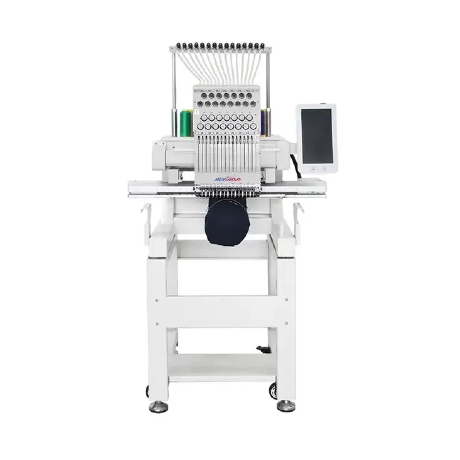
Even with a well-designed machine, incorrect setup procedures can create recurring embroidery problems.
The cap frame must hold the hat firmly while allowing the machine to rotate the hat during stitching. If the hat is not mounted correctly, the fabric may shift during embroidery.
Proper mounting ensures that the hat remains stable throughout the stitching process.
High-speed embroidery machines are capable of producing designs quickly, but speed must match the material being used. Thick or structured caps may require slightly slower speeds to maintain stitch accuracy.
Reducing speed can improve thread stability and reduce the likelihood of thread breaks.
Different hat materials require different stabilizers and needle types. Using incorrect backing materials may cause puckering or uneven stitching.
Selecting the correct needle and stabilizer combination helps maintain consistent embroidery quality.
Thread tension should be checked regularly, especially when switching between different materials or thread types. Small tension adjustments can significantly improve stitch consistency.
Operators who maintain routine equipment checks usually experience fewer embroidery problems.
While many embroidery issues are related to setup or design files, machine capability also plays an important role in production stability.
Modern computerized embroidery machines use advanced control systems to manage needle movement and thread coordination. Precise control ensures that each stitch follows the design path accurately.
A stable machine structure also reduces vibration during high-speed operation, helping maintain consistent embroidery quality.
Machines with multiple needles allow operators to load several thread colors at once. Automatic color switching eliminates manual thread changes and reduces interruptions during production.
This feature is particularly valuable for designs containing many color transitions.
Machines designed with intuitive control panels make it easier for operators to store and reuse embroidery settings. Repeatable parameters help maintain consistent results across multiple production runs.
Reliable embroidery equipment allows businesses to focus more on production and less on troubleshooting.
Preventing embroidery problems is often easier than correcting them later. Several practical steps can help businesses maintain high embroidery quality.
Running a test sample before starting large production runs helps identify potential design or setup issues. Adjustments can be made early, reducing material waste.
Different cap styles have different structural characteristics. Digitizing designs specifically for the cap type ensures better stitching performance.
A standard setup checklist helps operators confirm that the cap frame, thread tension, stabilizer, and needle type are all correct before production begins.
Consistency in preparation often leads to better embroidery results.
Problem | What It Looks Like | Most Likely Cause | Quick Prevention Tip |
Puckering | Fabric wrinkles around design | High stitch density or weak stabilizer | Adjust density and use stronger backing |
Design shifting | Misaligned layers or uneven shapes | Cap not mounted securely | Reinstall cap frame and tighten mounting |
Thread breaks | Thread snaps during stitching | Incorrect tension or excessive speed | Adjust tension and reduce speed |
Needle breaks | Needle snaps at seam areas | Stitching over thick seam | Use stronger needle and adjust design placement |
Most embroidery challenges are not random events. They are often the result of how machine capability, digitizing quality, and setup procedures interact during production. Understanding the hat embroidery machine common problem allows businesses to improve their embroidery workflow and maintain stable production quality.
With proper setup, well-designed embroidery files, and reliable equipment, many typical cap embroidery issues can be prevented. Professional embroidery machines produced by REVHON. are designed to provide precise stitching, stable performance, and efficient operation for embroidery businesses handling cap production.
If your business is expanding into cap embroidery or upgrading equipment, our team can help you explore professional embroidery solutions that match your production needs. Contact us today to learn more about our embroidery machines and how they can support your embroidery projects.
Reliable cap embroidery troubleshooting often begins with the right equipment, proper setup, and a clear understanding of the production process.
Puckering usually occurs when stitch density is too high or when the stabilizer is not strong enough. Adjusting the embroidery design and using proper backing materials can reduce this problem.
Thread breaks interrupt the stitching process and may affect the appearance of the design if not corrected quickly. Proper tension adjustment and correct needle selection help prevent this issue.
Yes. Hats have curved surfaces and structural seams that make embroidery more complex than stitching on flat garments.
Preparing the correct design file, mounting the cap securely, testing samples before production, and using reliable embroidery machines are the most effective ways to prevent problems.


