
close
Choose Your Site
Global
Social Media


Views: 0 Author: Site Editor Publish Time: 2026-09-23 Origin: Site


Apparel decorators inevitably hit a critical growth bottleneck as order volumes rapidly rise. You quickly outgrow your current production capacity. You then face a capital-intensive decision regarding exactly how to scale operations. Should you invest heavily in a robust machine designed for mass production? Or should you network several smaller units for maximum operational flexibility? This core operational dilemma forces you to choose between brute throughput and agile adaptability. We provide a transparent, math-driven evaluation framework to help you navigate this choice. You will learn how to align your equipment investments directly with your actual order profiles. We will explore how available labor capacity impacts your daily workflow. You must also consider how physical floor space limits your machinery options. By comparing these architectures side-by-side, you can make a highly informed decision for your shop. We aim to protect your capital while maximizing your daily yield.
Scaling a decoration business requires solving a complex business problem. Owners frequently miscalculate theoretical machine speed versus actual daily output. They assume maximum speeds guarantee high yields. This miscalculation creates severe bottlenecks during peak production seasons.
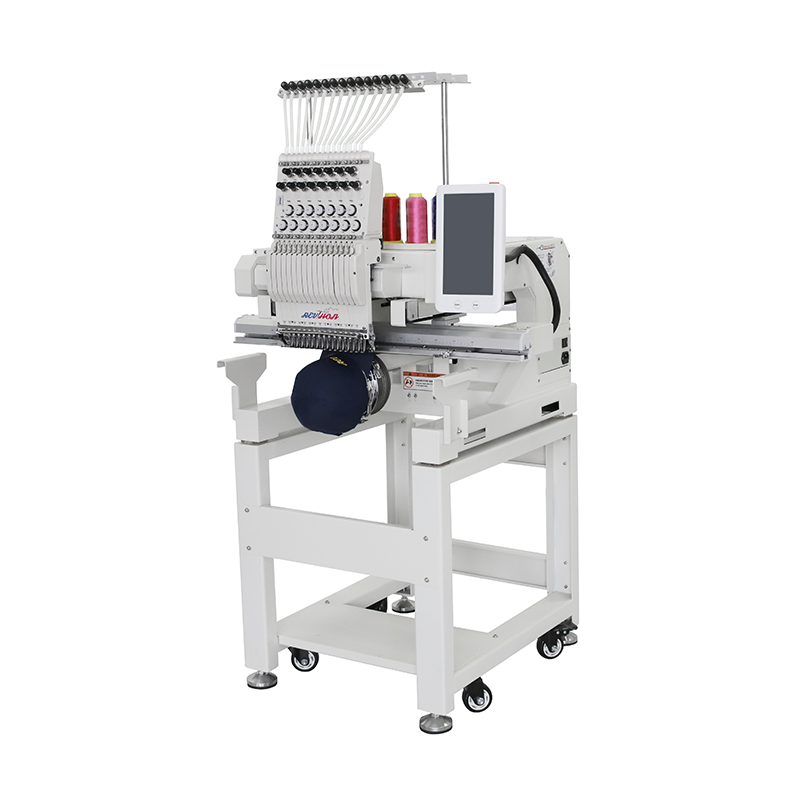
Theoretical speed often misleads new buyers. Many confuse maximum stitches per minute (SPM) with realistic daily yield. Actual output drops significantly when you factor in hooping garments. Thread color changes also consume valuable time during a shift. Routine maintenance further reduces actual operational hours. A single-head embroidery machine offers unique production dynamics to combat these delays. You can run completely different designs on multiple autonomous units simultaneously. One machine might stitch a left-chest corporate logo. Another can handle a complex full-back jacket design. A third unit can process personalized caps. You avoid bottlenecking entirely. Independent units provide superior agility for mixed orders. You maximize uptime because loading one machine never stops the others. This continuous workflow keeps your operator moving efficiently between stations.
High-volume identical orders demand a completely different approach. A multi-head embroidery machine shines during these massive production runs. Imagine processing an order for 100 identical left-chest corporate polos. One operator hoops garments rapidly and loads them into a four-head unit. The multiplier effect kicks in immediately upon pressing start. You finish four pieces in the exact time it takes a solo unit to finish one. However, the theoretical max SPM rarely reflects reality. Complex designs force the machine pantograph to slow down automatically. Wide stitch jumps and intricate details reduce actual operating speeds. You must account for this performance gap when projecting your daily capacity. A machine rated for 1,000 SPM might realistically average 700 SPM on complex designs.
Risk management remains a crucial evaluation dimension when scaling production. Operators often face frustrating downtime realities. You must address these common operator pain points proactively to maintain profitability.
Let us examine the mechanical reality of linked embroidery heads. A thread break on one head stops the entire system immediately. A needle hitting a dense seam on head three halts heads one, two, and four. The main drive shaft cannot operate independently. You lose production capacity across the board while the operator fixes the issue. This single point of failure severely impacts true yield calculations. Two minutes of downtime multiplied across four idle heads equals significant lost revenue. Contrast this rigid scenario against independent setups. A failure on one solo unit leaves your other machines operating perfectly at 100%. You isolate the downtime to a single garment. The rest of your fleet continues generating profit without interruption.
Your machine architecture must map directly to your core business model. The customization market relies heavily on high-mix, low-volume orders. Print-on-demand businesses thrive on independent solo units. You can process personalized names and bespoke designs seamlessly. E-commerce shops love this highly modular approach. Conversely, mass production demands a low-mix, high-volume strategy. Corporate contracts and wholesale uniform orders require massive replication. Linked heads support these identical runs efficiently. You must analyze your core customer base carefully. Match your equipment capabilities to your dominant order type.
Facility limitations pose significant implementation risks. You must carefully consider the hidden costs of physical setup before purchasing heavy equipment.
Larger machines demand substantial industrial floor space. A multi-head unit weighs significantly more than individual models. You often need double doors just to maneuver it inside your building. Installation frequently requires a forklift and a specialized rigging team. Furthermore, these heavy machines typically require dedicated 220V power drops. Older buildings might need expensive electrical panel upgrades. Reinforced flooring is sometimes necessary to handle the vibration. In contrast, individual solo units remain highly modular. You can place them on heavy-duty tables anywhere in your shop. They usually run on standard 110V or 120V electrical outlets. You avoid expensive electrical upgrades and complex installations entirely. This modularity allows you to scale incrementally as floor space permits.
Modern production management relies heavily on advanced networking software. Networking capabilities seamlessly bridge the gap between different architectures. Operators can push designs to a fleet of solo units simultaneously. This digital synchronization mimics the efficiency of a larger linked machine. You gain the batch-loading benefits without the rigid physical constraints. You can monitor the progress of each unit from a central digital dashboard. Barcode scanners allow operators to load specific designs instantly. Software enables seamless file distribution across your local network. You maintain incredible agility while dramatically improving overall efficiency.
Justifying your initial capital expenditure requires careful analysis. You must also understand your ongoing operational expenses to protect your profit margins.
Let us compare the upfront costs directly. Buying one four-head machine often requires a substantial lump-sum investment. Purchasing four individual solo units might spread that capital burden over time. You must evaluate the depreciation curve of both options thoroughly. Resale value liquidity also matters greatly for growing businesses. Individual machines are generally easier to liquidate on the secondary market. If your business pivots, you can quickly sell one unit. Selling a massive industrial machine takes much longer. It also reaches far fewer potential buyers.
Table: Upfront Investment and Liquidity Comparison
| Evaluation Dimension | Fleet of Single-Head Units | Multi-Head Unit |
|---|---|---|
| Initial CapEx Strategy | Incremental purchasing allows phased scaling. | Requires a large lump-sum capital investment. |
| Resale Liquidity | High. Appeals to hobbyists and small shops. | Moderate. Limited to established commercial buyers. |
| Depreciation Curve | Holds value well in the consumer/prosumer market. | Depreciates like standard heavy industrial equipment. |
| Installation Expenses | Minimal. Usually self-installed on standard tables. | High. Often requires rigging, forklifts, and electricians. |
Labor efficiency directly impacts your bottom line. Assessing operator workload is a vital step in scaling. One experienced operator can easily manage a six-head unit. They hoop the identical garments and load them in efficient batches. Conversely, running four networked solo units requires continuous physical movement. The operator constantly unloads and reloads different independent stations. Maintenance costs also diverge significantly between architectures. Servicing complex mainboards demands specialized, expensive technicians. Synchronized drive shafts require meticulous calibration. Standard solo machines undergo much simpler routine maintenance. You can often replace basic parts yourself, saving money on service calls. Training new employees is also generally faster on solo units. The interface is less intimidating for absolute beginners.
Actionable criteria help finalize your buying decision. You need a structured shortlisting logic to avoid emotional purchases. Base your decision entirely on empirical shop data.
Scaling with independent units makes sense in very specific operational scenarios. You should choose this path if your data aligns with the following conditions:
This path protects your agility. You can pivot quickly between complex jobs without stopping your entire production line.
Upgrading to a larger linked machine suits entirely different operational needs. The single head vs multi head embroidery machine debate hinges entirely on volume. Consider this architecture if you meet the following criteria:
This architecture maximizes your labor efficiency. A single operator can produce massive yields when processing uniform batches.
The core debate is never about which machine is objectively better. It revolves entirely around aligning your chosen architecture with your specific order profile. You must gauge your operational risk tolerance regarding mechanical downtime. Both paths offer lucrative growth opportunities when applied correctly to the right business model. Advancing your business requires concrete data rather than assumptions. We strongly advise auditing your last three months of orders immediately. Determine your exact average order quantity. Calculate your typical design variance per shift. Use these hard numbers before booking a dealer demo. Requesting equipment quotes without this baseline data leads to poor investments. Let your actual production data guide your machinery upgrade.
A: The upfront capital expenditure is often comparable, but hidden expenses vary. A four-head machine requires professional rigging, 220V electrical upgrades, and potential floor reinforcement. Four individual units avoid these heavy installation fees and run on standard 120V outlets. However, managing multiple independent units usually requires purchasing premium networking software to synchronize file transfers effectively.
A: Yes, but it requires an optimized physical workflow. The operator needs centralized hooping stations positioned close to the machines. Minimizing the physical distance between units is critical. Because independent units finish jobs at different times, the operator must constantly move to unload and reload frames, which demands higher physical stamina compared to batch-loading a larger machine.
A: Maximum stitches per minute (SPM) are generally identical across commercial tiers. The speed advantage comes from batch-loading efficiency, not needle speed. Hooping and loading four identical shirts onto one machine takes less cumulative transition time than operating four independent interfaces. However, complex designs force both machine types to slow down their pantographs automatically.
A: Due to the shared mechanical drive shaft, a failure on one head affects the entire machine. If head two experiences a thread break or a needle strike, built-in sensors halt the main motor. Heads one, three, and four must sit idle while the operator corrects the issue on head two, resulting in lost production time across all stations.


