
close
Choose Your Site
Global
Social Media


Views: 0 Author: Site Editor Publish Time: 2026-09-18 Origin: Site


In commercial textile production, an operation is only as profitable as its daily reliability. A sequin embroidery machine becomes a major liability if it cannot process diverse materials without causing frequent downtime. Material choices directly dictate essential machine calibration steps. The chemical composition of your sequins controls maximum production speeds. Meanwhile, the density of your base fabric influences overall defect rates. Ignoring these critical variables inevitably leads to skipped stitches, broken needles, and ruined garments. This guide serves as a practical technical evaluation framework for production managers and procurement teams. You will discover how to assess equipment capabilities accurately. We will help you align hardware specifications against complex material needs. By understanding these mechanical interactions, you can make clear, data-backed purchasing decisions. Let us explore exactly how fabric behavior and sequin chemistry influence mechanical success on the factory floor.
Compatibility Drives Yield: Mismatched sequin types (e.g., PVC vs. PET) and feeder mechanisms account for the majority of skipped stitches and thread breaks.
Base Fabric Dictates Calibration: Transitioning from rigid wovens to high-stretch knits requires specialized tension settings and appropriate stabilizers to prevent puckering under the weight of sequin designs.
Specification Alignment is Critical: Evaluating precise sequin embroidery machine specifications—such as dual-sequin feeders and motorized presser feet—is mandatory for scalable production.
Supplier Validation: A reliable sequin embroidery machine supplier must provide proof of concept through custom sampling on your specific target materials, not just standard test swatches.
Ignoring material compatibility causes severe hidden costs across your production floor. Frequent needle replacements drain your daily maintenance budget rapidly. Every broken needle stops the machine entirely. Operators must re-thread the system and realign the design carefully. High scrap rates waste expensive base garments. Ruined fabrics cannot be salvaged once a needle pierces them incorrectly. Operator fatigue spikes quickly under these conditions. Staff members become frustrated when they must constantly fix broken threads. These hidden costs erode profit margins faster than basic utility expenses.
You must define clear success criteria for your commercial operations. A successful setup establishes a reliable baseline for mass production. Your equipment should easily maintain speeds of 700+ revolutions per minute (RPM). It must achieve this speed without dropping sequins. It must also avoid sudden thread tension failures. Consistent speed guarantees predictable delivery schedules. Predictable schedules keep your primary clients satisfied. If your hardware forces you to drop speeds below 500 RPM, you lose crucial competitive advantages.
Many buyers assume modern hardware solves every production problem automatically. The reality of commercial manufacturing is quite different. You might invest heavily in an advanced embroidery technology embroidery machine. However, superior hardware cannot compensate for poor material selection. Complex machines require precise inputs to function correctly. Hardware cannot fix incorrect digitizing parameters. It cannot force a heavy sequin onto a flimsy fabric magically. You must actively match your materials to the mechanical limits of your equipment. Knowledgeable operators remain your best asset for maintaining high yields.
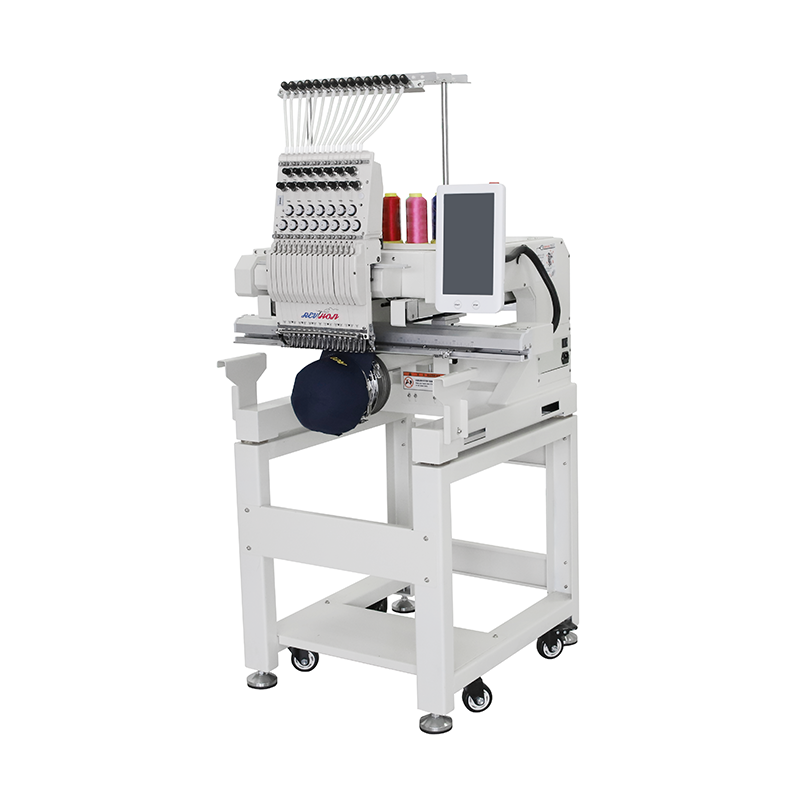
Sequin chemistry significantly influences daily feeder calibration. Let us compare common PET and PVC materials. PVC offers distinct mechanical rigidity during high-speed feeding. It cuts cleanly and resists bending. PET provides an excellent environmentally friendly alternative. However, PET is often highly heat-sensitive. This sensitivity requires specific calibration adjustments. Your cutter and feeder must operate differently for PET. The cutting blade generates friction during rapid strikes. This friction melts PET edges slightly. Static electricity then builds up rapidly within the feeder path. Static causes incomplete cuts and jams the dispensing unit entirely. Operators must regulate factory humidity to combat this static buildup.
Size and shape variations demand careful mechanical attention. Feeding micro-sequins ranging from 2mm to 3mm requires extreme precision. The feeder must push these tiny pieces without misaligning the center hole. Large or custom shapes up to 9mm demand wider feeder clearances. Heavy sequins carry more inertia during dispensing. If you run the machine too fast, inertia flings the sequin past the needle. You must program slower feed rates for larger diameters.
Cupped sequins behave entirely differently than flat sequins. Cupped varieties require distinct presser foot height adjustments. A cupped shape adds three-dimensional volume to the fabric surface. The presser foot must clear this raised edge safely. High-speed runs will easily crush cupped materials if heights remain incorrect. Crushed plastic ruins the visual appeal of the final garment.
We recommend strict risk mitigation protocols for all operators. Instruct your staff to verify exact tolerance levels daily. They should test the sequin dispensing unit thoroughly. Do this before accepting large production runs. Run a small sample strip using the exact design file. This simple verification step prevents massive batch failures. It also identifies worn cutting blades before they cause major jams.
Applying heavy sequin patterns creates intense mechanical stress. An embroidery machine struggles when processing lightweight or high-stretch fabrics. Silk and spandex stretch unpredictably under rapid needle punctures. The weight of the plastic disks drags the fabric downward. You must maintain proper framing tension at all times. Operators should use specialized magnetic hoops for delicate stretch knits. These hoops distribute tension evenly without crushing the fibers.
The role of stabilizers is completely non-negotiable in this process. You must use high-quality tear-away or cut-away stabilizers. Cut-away backings provide permanent structural support for stretch garments. Tear-away backings work best for rigid woven fabrics. These layers prevent aggressive puckering under dense designs. If you skip the stabilizer, the design will collapse inward upon itself.
Friction and needle heat introduce separate operational challenges. Dense base materials trap excessive heat during long runs. Think about heavy denim or thick leather garments. Combining them and sequin attachments increases needle friction exponentially. This intense friction quickly shreds standard polyester threads. Thread shredding stops production instantly.
We highly recommend using specific needle types for these applications. Titanium-coated needles resist heat buildup effectively. They slide through dense materials with minimal resistance. You should also select appropriate needle sizes. Use a larger needle like a 90/14 for denim applications. Proper sizing directly mitigates thread shredding. It also prevents nasty fabric tearing during rapid frame movements.
Base Fabric Type | Recommended Stabilizer | Optimal Needle Size / Type | Tension Requirement |
|---|---|---|---|
Lightweight Knits (Spandex) | Medium Cut-away | 75/11 Ballpoint | Low to Medium |
Standard Wovens (Cotton) | Standard Tear-away | 75/11 Sharp | Medium |
Heavyweight (Denim/Canvas) | Heavy Cut-away | 90/14 Titanium Sharp | High |
Delicate (Silk/Organza) | Water-soluble | 70/10 Microtex | Very Low |
You need clear hardware lenses during your equipment evaluation. First, examine the available feeder types closely. Single, dual, or multi-sequin devices on a single needle offer different capabilities. Dual-feeders allow two different sizes or colors on one design. Pneumatic feeders provide robust, consistent pushing power. However, they require external air compressors and dedicated airlines. Electronic motor-driven feeders deliver superior precision. They use stepping motors to push the material perfectly every time. This precision matters greatly when running 3mm micro-sequins.
Presser foot mechanics are equally critical for material versatility. Look for independently adjustable presser feet. Some advanced models feature motorized presser foot height control. They must adapt seamlessly to varying fabric thicknesses. Base fabrics and sequin layers change rapidly across a single design. Precise sequin embroidery machine specifications dictate exactly how well your hardware handles these variations. An independent foot ensures the standard stitching side does not crush the delicate plastic side.
Software and control systems matter just as much as physical hardware. Assess the onboard control panel carefully during your demonstrations. It should allow real-time tension adjustments during active runs. Strong error-diagnostic capabilities remain vital for operators. Automatic sequin drop detection saves countless ruined garments. The software should halt the machine immediately if a piece fails to feed. This prevents large gaps in your finished design.
Consider the delicate balance between scalability and complexity. Highly versatile machines require higher maintenance budgets. They contain more moving parts and complex circuit boards. They also demand highly skilled operators to manage these features. You must weigh these operational demands against your actual production needs. Do not buy a complex multi-feeder system if you only run basic flat designs.
Feature | Pneumatic Drive Systems | Electronic Motor Drive Systems |
|---|---|---|
Power Source | External Air Compressor | Internal Stepping Motors |
Precision Level | Moderate (Prone to air pressure drops) | Very High (Digitally controlled) |
Maintenance Needs | Check air lines, bleed moisture valves | Keep sensors clean, update software |
Best Use Case | Standard 5mm-7mm flat sequins | Micro-sequins (2mm) and complex shapes |
Never base your purchasing decision solely on glossy sales brochures. You must demand a rigorous "proof of concept" test. A reliable sequin embroidery machine supplier will prove their marketing claims happily. Standard test swatches often use perfect, stiff backings. They do not represent real-world factory conditions. Make the vendor run a complex, dense digitized file. They must use your specific sequins and base fabrics. If they refuse custom sampling, remove them from your shortlist immediately.
Post-sale support and service level agreements (SLAs) define long-term success. Evaluate the supplier's true commitment to operator training. Basic manual handovers are insufficient. They must teach your staff material-specific calibration techniques. Ask them how to adjust the cutter timing for PET materials. Gauge their technical knowledge based on their answers. A good partner helps you maximize yield from day one.
Warranty terms and parts availability need close scrutiny. Consumable parts wear out rapidly due to daily material friction. Cutter blades become dull after a few million strikes. Specialized needles snap during heavy denim runs. Feeder feet wear down from constant plastic contact. Check the local stock levels for these specific parts. Ensure replacement components remain readily available within your region. Waiting two weeks for a tiny blade ruins production schedules.
Request a custom sample run using your most difficult fabric.
Demand a live demonstration of the error-diagnostic systems.
Review the preventative maintenance schedule for the feeder mechanisms.
Verify local inventory levels for consumable cutting blades.
Create a standardized technical evaluation checklist for your procurement team. They should use this tool during all live machine demonstrations. A strict checklist forces suppliers to address real-world operational challenges. It prevents sales representatives from diverting attention away from mechanical limitations. Document every test result meticulously for comparison later.
The true return on investment for your equipment depends entirely on material synergy. Hardware specifications must perfectly align with your intended production materials. Mismatched setups cause endless frustration and financial loss. Careful planning prevents these outcomes entirely.
Remember that no commercial machine acts as a magical "plug-and-play" solution. You cannot process all fabrics flawlessly without making mechanical adjustments. Knowledgeable operator intervention remains absolutely essential for high-yield runs. Training your staff matters just as much as buying good hardware.
We encourage you to take immediate action. Request custom material sample runs from your shortlisted suppliers today. Push them to demonstrate true hardware capabilities under stressful conditions. Download a technical evaluation checklist before scheduling any live demonstrations. Make informed choices to secure profitable, scalable production for your business.
A: Most standard machines face strict physical constraints. While bolt-on sequin devices certainly exist, they often struggle with timing. Machines factory-built with integrated sequin feeding protocols generally offer superior synchronization. They experience significantly lower defect rates. Bolt-on devices often lack the complex software integration needed to detect dropped pieces accurately during high-speed runs.
A: Digitizing software must account for the specific physical diameter of the sequin. This prevents the needle from striking the outer plastic rim. A needle strike shatters the piece instantly. Thicker materials require wider stitch spacing. You must also program specific jump stitches to accommodate the feeder movement between placements.
A: Several common culprits cause these issues. Static electricity frequently builds up in the feeder. This is especially common with dry PET materials. Worn cutting blades fail to separate pieces cleanly. Additionally, you might have a mechanical mismatch. The machine’s RPM might simply exceed the feeder’s maximum mechanical dispensing rate.


