
close
Choose Your Site
Global
Social Media


Views: 0 Author: Site Editor Publish Time: 2026-09-22 Origin: Site


Transitioning to chenille production often requires a significant capital expenditure. You face a core dilemma when scaling your facility. Off-the-shelf equipment frequently forces frustrating compromises. You might sacrifice throughput, tension control, or product variety. Balancing heavy letterman jackets and lightweight custom patches is difficult on stock hardware. This article provides a highly technical, evidence-based framework. We will help you evaluate when a bespoke equipment build makes sense. Standard market offerings work well for beginners. However, growing enterprises need specialized solutions. We explore exact hardware limits, facility readiness, and detailed machine configurations. You will learn to recognize critical production bottlenecks accurately. We also guide you through the complex supplier vetting process. This ensures you make the right hardware investment for your specific production line. Read on to master the complexities of custom embroidery hardware.
High-volume patch businesses face unique physical limits. Floor space becomes extremely scarce quickly. You cannot simply drop massive multi-head units into a constrained facility. Small shops often lack the square footage for a massive twelve-head combo beast. Instead, you need hardware optimized for your exact spatial footprint. A custom build maximizes output per square foot. It lets you pack more high-speed heads into a tighter frame. This maximizes your facility yield without requiring a warehouse expansion.
Relying on standard flat-and-chenille combo setups causes hidden inefficiencies. Consider the ratio of flat stitching to chenille in your typical order. Suppose a jacket back requires 80% chenille and only 20% flat stitches. A 50/50 combo machine wastes valuable production time daily. Half the machine sits entirely idle while the active chenille heads finish the run. A custom machine fixes this imbalance completely. You dictate the exact head ratio based on your unique historical data.
Standard hardware struggles significantly against thick materials. Heavy 24-ounce Melton wool letterman jackets require extended physical clearance. Unique localized appliqués demand highly custom framing solutions. Stock machines simply lack the proper physical dimensions. They routinely cause frustrating hoop collisions. They also skip stitches on exceptionally thick garment seams. Custom equipment offers adjustable presser foot heights. It accommodates bulky winter wear effortlessly.
Modern digitizing software can cleverly simulate chenille loops. However, this faux technique eventually fails premium client expectations. Discerning customers want authentic, high-density loop stitches. Market demands shift toward true tactile texture eventually. You must upgrade your hardware when this happens. Dedicated equipment delivers the genuine, fluffy finish you need. Software tricks cannot replace a physical under-table looper.
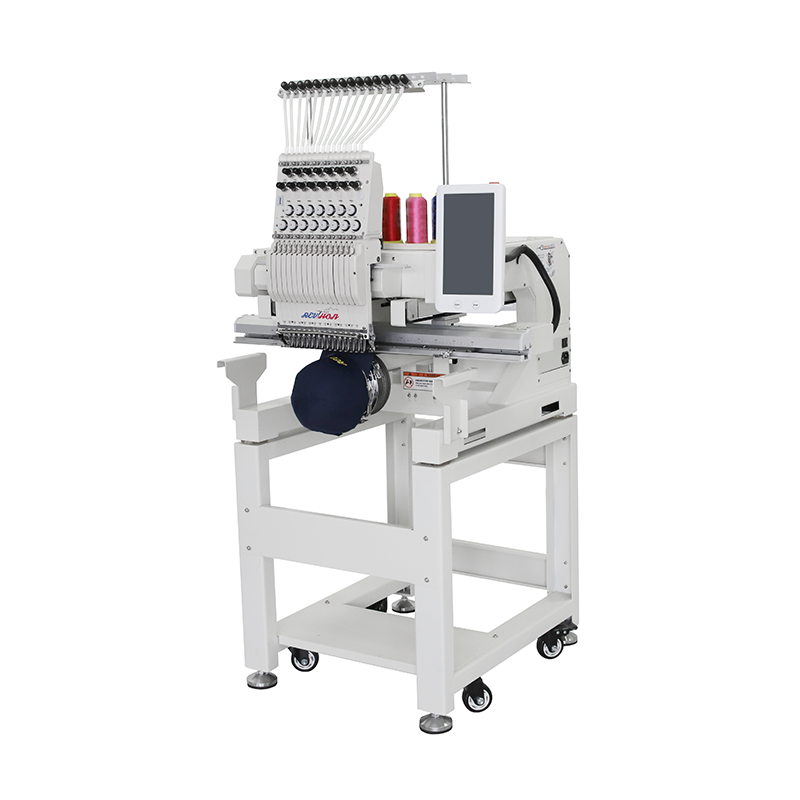
Analyze your historical order data carefully before buying. Use this exact data to determine your ideal head ratio. You might need six chenille heads paired alongside only two standard flat heads. Custom builds let you match the hardware exactly to your typical run. This eliminates idle time across your production floor. It creates a seamless, highly efficient workflow. Analyzing these specific chenille embroidery machine specifications prevents costly purchasing mistakes.
Local market demands dictate your necessary color capacity. Evaluate whether you truly need a 6-needle or a 9-needle setup. Standard athletic wear often requires fewer thread colors per design. Conversely, highly detailed school mascots might demand nine or more needles for gradient shading. Choose carefully based on your actual client design files. Adding unnecessary needles increases mechanical complexity. It also raises the risk of thread tangles.
High operating speeds easily cause frustrating thread breaks. You need custom servo motors to maintain consistent loop heights. Specialized tensioning systems adjust dynamically during the entire stitch out. They handle thick, abrasive acrylic yarns smoothly. This prevents the yarn from snapping under high tension. Proper calibration keeps the machine running autonomously. It significantly reduces constant human intervention.
Your custom hardware must integrate flawlessly into your workflow. You want an advanced embroidery technology embroidery machine reading complex design files easily. It should support enterprise-grade software natively. Automated color change systems must handle thicker chenille yarns seamlessly. Specialized thread trimmers are also vital for clean, professional finishes. Outdated standard trimmers often jam when cutting heavy loops.
Custom hardware profoundly changes your digitizing process. You must recalibrate your software digitizing parameters immediately upon installation. Your digitizers will need dedicated retraining. They must learn to optimize stitch paths for the new machine. They must master the new loop height codes and density rules. Proper optimization prevents needle deflection entirely. It ensures clean, uniform loops across the whole garment.
Upgrading industrial hardware requires significant facility improvements. Before finalizing your order, you must audit your workspace thoroughly. Standard wall outlets cannot support industrial bespoke machinery.
Custom machines take significant time to engineer and build. Expect typical lead times ranging from three to six months. Sometimes, global supply chain issues extend this waiting period further. You must plan smart production bridging strategies carefully. Build up enough inventory before taking your old machine offline. Communicate potential delays transparently to your key clients.
Your production staff needs adequate time to adapt safely. Transitioning from standard operation requires structured, planned downtime. Operators must learn entirely unique daily maintenance protocols. They also need hands-on practice managing complex custom tension settings. Do not expect maximum daily throughput during the first month. Give them time to master the new mechanics completely.
Never purchase a machine without seeing actual physical results. Insist the manufacturer runs your most challenging digitizing files. They must produce a perfect sample on a comparable custom setup. Do this strictly before you sign any binding purchase order. A video demonstration is rarely enough. Demand physical samples mailed directly to your facility.
A highly reputable chenille embroidery machine supplier offers full engineering transparency. They will share clear machine schematics and component sourcing origins. You should know precisely if they use high-grade Japanese rotary hooks. You should verify the exact servo motor brands installed. They must also clearly state any structural customization limits upfront.
Evaluate their proposed SLA for downtime resolution critically. You must know exactly how quickly they respond to major breakdowns. Confirm if the custom components are strictly proprietary. Proprietary parts are notoriously difficult to source quickly. Modified standard parts are much easier to replace locally. Avoid suppliers holding back basic mechanical replacement components.
| Feature Dimension | Standard Combo Machine | Custom Built Machine |
|---|---|---|
| Head Configuration | Fixed 50/50 ratio (Flat/Chenille) | Fully adjustable (e.g., 80/20 ratio) |
| Garment Clearance | Standard flat apparel focus | Adjustable for heavy outerwear |
| Thread Trimmers | Basic mechanical scissor cut | Pneumatic heavy-yarn cutters |
| Motor Drives | Standard stepping motors | High-torque servo motors |
Read the fine print carefully before finalizing the deal. Custom builds often have highly specific warranty exclusions attached. User-calibrated tension components might lack coverage. Knowing these vital details helps you set realistic annual maintenance budgets. Ask clear, direct questions about coverage limits early. Prevent surprise billing during emergency service visits.
A bespoke production machine acts as a massive strategic asset. It perfectly supports high-volume patch or heavy outerwear businesses. However, it is never a magical silver bullet for poor production management. You must ensure your facility processes are already highly optimized. Choosing a dedicated chenille embroidery machine requires careful, methodical planning. It eventually delivers unmatched stitch quality and speed. A perfectly optimized embroidery machine transforms your entire production floor permanently.
We strongly recommend executing these specific next steps:
A: A custom machine typically carries a 20% to 50% premium over standard models. The exact difference depends heavily on your required level of customization. Specialized needle setups, custom framing, and pneumatic trimmers all increase the base price. However, this premium often translates to much higher daily production efficiency.
A: No, it is mechanically impossible to produce true chenille on a standard flat machine. Authentic chenille stitching requires a specialized under-table looper mechanism. Flat machines lack the physical clearance and mechanical architecture for this vital component. You must invest in dedicated hardware to create genuine loop stitches.
A: Manufacturing a custom machine usually takes three to six months. This timeline accounts for initial engineering reviews, factory queues, and actual assembly. International shipping logistics and customs clearance can add several more weeks. Always factor these extended wait times into your production expansion strategy.
A: You can generally use standard enterprise industry software. However, the exact digitizing parameters must be strictly customized. Stitch length, density, and specific loop height codes require recalibration. Your digitizer must adapt their techniques to match the new hardware’s advanced capabilities to prevent thread breaks.


