
close
Choose Your Site
Global
Social Media


Views: 0 Author: Site Editor Publish Time: 2026-02-11 Origin: Site


Are you curious about the types of embroidery machines? Whether you're a hobbyist or running a business, choosing the right machine can make all the difference. In this article, we'll explore the different types of embroidery machines, their features, and how they suit various embroidery needs.
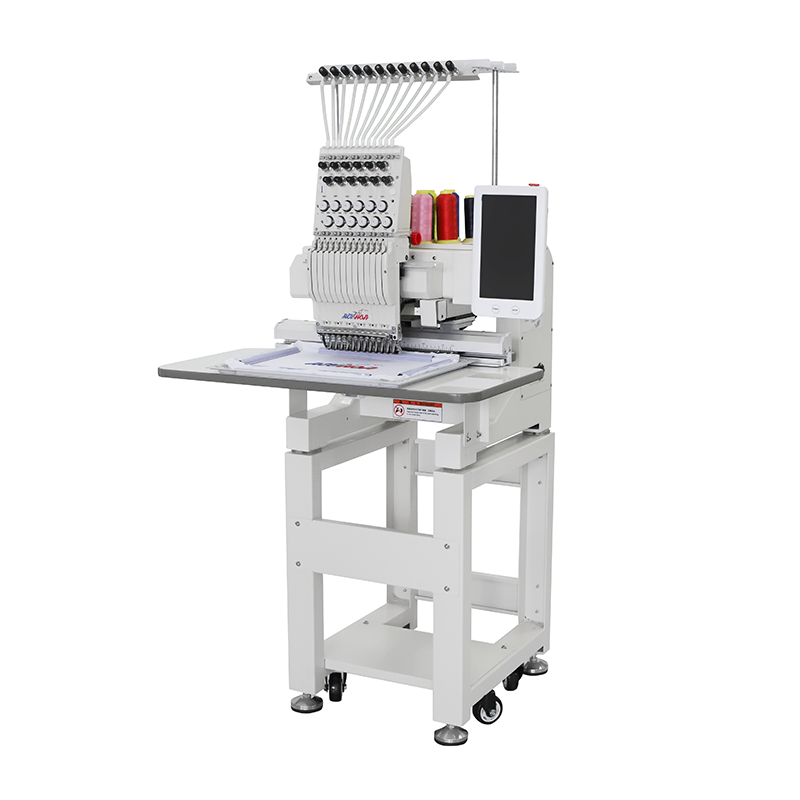
Mechanical embroidery machines are the most basic form of embroidery equipment. These machines rely on manual operation, with users adjusting various components like dials, levers, and knobs to control the stitching process. The design is created by manually moving the fabric under the needle, which stitches directly onto the material.
● Basic Operation: These machines are operated manually, meaning the user has to guide the fabric and set the stitch length and tension by hand.
● Manual Control: Users can only work with a limited number of stitches and often need to adjust tension and stitch width manually.
● Design Limitations: Creating complex designs requires skill, as there is no built-in digital interface to load patterns or adjust settings.
Advantages:
● Cost-effective: Mechanical machines are significantly more affordable compared to their electronic or computerized counterparts.
● Low Maintenance: These machines don’t require complicated electronics or software, making them easier and cheaper to maintain.
● Ideal for Beginners: With basic features, they’re easy to learn for hobbyists or small businesses just starting in embroidery.
Limitations:
● Limited Features: Unlike electronic or computerized machines, mechanical machines offer fewer stitch options and no automatic adjustments for thread tension or needle threading.
● Manual Operation: Users must manually adjust settings, which can slow down the process and make complex designs more difficult to achieve.
● Lack of Precision: The accuracy of the design can be affected by human error, as the machine requires manual handling throughout the entire embroidery process.
Electronic embroidery machines represent a significant step forward from mechanical models. These machines come with motors, LCD screens, and various automatic features, making them more efficient and user-friendly.
Unlike mechanical models, which rely on manual adjustments, electronic embroidery machines automate several key functions, such as thread tension and stitch selection, making it easier to achieve consistent results.
● Motors: Electronic models are powered by motors that control the needle movement, making the embroidery process smoother and more precise.
● LCD Screens: Electronic machines feature digital interfaces, often equipped with LCD screens for easy navigation and pattern selection.
● Automatic Features: Many electronic models include automatic functions like needle threading, thread cutting, and speed adjustments, reducing the time and effort required for complex designs.
Feature | Mechanical Embroidery Machines | Electronic Embroidery Machines |
Operation | Manual adjustments and control | Motorized with automatic features |
Thread Tension | Manual adjustments | Automatic tension control |
Design Selection | Limited built-in stitches | LCD screen for easy design selection |
Speed Control | Manual adjustments | Adjustable speeds for efficiency |
Electronic embroidery machines offer a range of benefits that make them more versatile and efficient than their mechanical counterparts. These enhancements are ideal for intermediate users or small businesses looking to scale their operations without investing in more expensive computerized models.
● Automatic Thread Tension: No need to manually adjust tension settings, as the machine automatically ensures optimal tension for various threads.
● Stitch Selection: With a wider variety of built-in designs and stitch options, electronic models provide more creative flexibility compared to mechanical machines.
● User-friendly: LCD screens and intuitive controls make it easier to select designs, adjust settings, and monitor progress.
For small businesses or hobbyists looking to take their embroidery work to the next level, electronic embroidery machines offer the perfect balance between functionality, ease of use, and affordability.
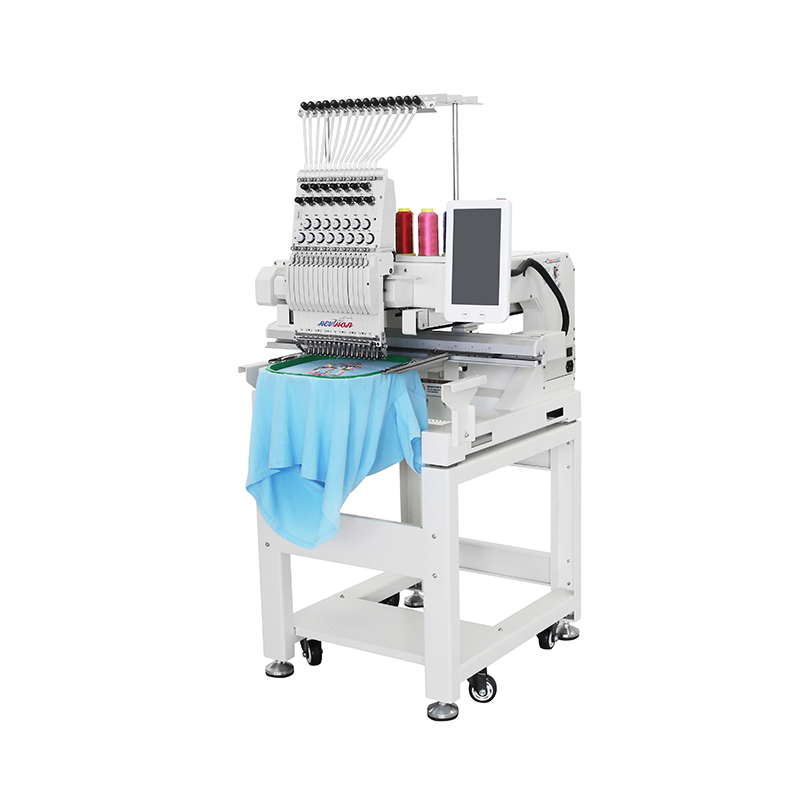
Computerized embroidery machines represent the cutting edge of the embroidery industry. These machines are equipped with advanced features that set them apart from mechanical and electronic models. Qihong’s advanced computerized embroidery machines cater to businesses and professionals, offering precision, reliability, and versatility for a wide range of embroidery projects.
Key features include:
● Connectivity: Most computerized machines support USB ports and wireless connections, making it easy to import and transfer designs directly from a computer or external device.
● Memory Storage: These machines come with expansive memory, allowing users to store multiple embroidery designs, reducing the need to reload files constantly.
● Design Flexibility: Users can create custom designs using embroidery software and transfer them to the machine with ease, giving a higher degree of flexibility.
Computerized embroidery machines come packed with innovative features that make them perfect for high-volume, professional work. These functions not only enhance the speed of production but also ensure that the quality and precision of designs remain consistent across all items.
● Touchscreen Controls: Modern computerized models come with touchscreen interfaces, allowing users to easily navigate through menus, adjust settings, and select designs.
● Automatic Thread Cutters: These machines often include automatic thread cutters, which automatically trim the thread at the end of each design, reducing manual labor and improving efficiency.
● Speed Adjustments: Users can control the speed of stitching, optimizing production times for different projects.
Computerized embroidery machines are designed to handle large-scale production with complex designs. They are perfect for businesses or professionals who require high efficiency and a high level of detail in their embroidery work. Below are some of the most common uses:
● Large-Scale Production: These machines are built for continuous work and can operate for long hours without the need for frequent adjustments.
● Complex Designs: Their ability to execute intricate patterns makes them ideal for high-detail embroidery on a variety of fabrics.
● High-Efficiency Workflows: Perfect for businesses that need to produce large volumes of items with consistent quality, such as uniforms, promotional products, and custom garments.
Single-head embroidery machines are designed for smaller-scale operations, making them ideal for small businesses or home use. These machines feature up to 15 needles, allowing users to create intricate, multicolored designs without frequent thread changes. They are known for their flexibility and space-saving features, making them a perfect choice for limited workspaces.
● Functionality: The single-head machine is great for small-scale custom jobs, such as individual garments, personalized products, or small batches.
● Design Flexibility: Users can switch between designs easily, offering versatility in customization for various materials.
● Space-saving: The compact size is ideal for small studios or home-based embroidery businesses.
Feature | Single-head Embroidery Machines |
Needle Capacity | Up to 15 needles |
Ideal for | Small businesses and home use |
Functionality | Versatile and flexible designs |
Ease of Use | Touch-screen interface, multilingual options |
For those looking to produce large volumes of embroidered items, multi-head embroidery machines are the solution. These machines allow for multiple heads to work simultaneously, significantly increasing the speed and efficiency of embroidery production. They are perfect for commercial use, making them a staple in large-scale manufacturing settings.
● Designed for High Volume: With multiple heads working in parallel, these machines can produce identical designs on several items at once, drastically reducing production time.
● Efficiency: Ideal for high-demand projects, such as uniform production, promotional items, or large orders for businesses.
● Key Features: Qihong’s multi-head machines are optimized for mass production, ensuring that businesses can complete bulk orders with high precision and minimal downtime.
Feature | Multi-head Embroidery Machines |
Needle Capacity | 2 to 30+ heads |
Production Speed | High-speed, simultaneous operation |
Ideal for | Large-scale, high-volume orders |
Efficiency | Reduces production time for bulk orders |
Cap and specialty embroidery machines are built for specific applications that require precise embroidery on non-flat materials. These machines are tailored for embroidery on caps, chenille, and tufting projects, as well as other specialized fabric types.
● Cap Embroidery: These machines feature a curved frame to accommodate the unique shape of caps, ensuring precise stitching on curved surfaces.
● Chenille & Tufting: Specialized machines allow for the production of textured designs such as chenille embroidery or tufting, commonly used in fashion and home décor.
● Niche Applications: Perfect for businesses targeting niche markets, offering unique designs on non-traditional materials.
Embroidery machines come in different types, each offering distinct features. Mechanical embroidery machines are simple and cost-effective, ideal for beginners. Electronic models offer more automation and versatility, while computerized embroidery machines provide high precision and advanced features, making them suitable for high-volume and professional work.
Qihong Electro-Mechanical offers a range of embroidery machines, from single-head to multi-head models, optimized for efficiency and versatility.
A: Embroidery machines are devices used to create designs on fabrics. They automate the process, allowing for consistent and detailed stitching.
A: Computerized embroidery machines have digital controls and features like memory storage, while mechanical machines rely on manual adjustments for stitching.
A: Electronic embroidery machines offer automatic thread tension, versatile stitch selection, and are suitable for intermediate users and small businesses.
A: Single-head embroidery machines are compact, flexible, and ideal for small businesses or home use, making them cost-effective and space-saving.
A: Multi-head machines allow multiple embroidery heads to work simultaneously, reducing production time and increasing efficiency for large orders.


