
close
Choose Your Site
Global
Social Media


Views: 0 Author: Site Editor Publish Time: 2026-07-29 Origin: Site


What if one machine could embroider several shirts during one production cycle? A multi-head embroidery machine does this through synchronized computer control. It repeats one digital design across several workstations. In this article, you will learn how its heads, needles, frames, software, and operators work together.
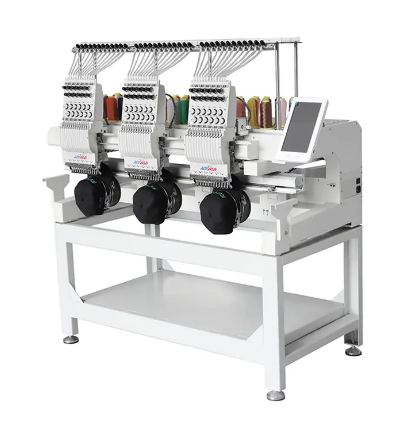
● Each head carries several threaded needles. Programmed color commands select the right needle, reducing manual rethreading between design sections.
● The needles move vertically, while hooped products move across controlled X and Y positions. These motions create the programmed stitch path.
● Reliable output needs more than several heads. Good digitizing, equal hoop placement, proper tension, suitable stabilizer, and regular inspection protect consistency.
● Multi-head production fits repeat orders, including uniforms, caps, workwear, team garments, and branded merchandise. Single-head equipment often suits samples and one-off jobs.
● The embroidery area sets maximum frame travel. Fixtures, seams, and product shapes may reduce the usable field.
● More heads can increase output per cycle. Actual capacity still depends on stitch count, loading time, color sequence, thread breaks, and operator skill.
● A multi-head embroidery machine uses one computerized design program to coordinate several active heads during the same production run.
An embroidery head is a complete stitching station. It includes needle bars, thread guides, tension controls, presser parts, and a hook-and-bobbin system. Each active head normally works on one item.
Commercial ranges may include two, three, four, six, or eight heads. Many systems offer 9, 12, or 15 needles on every head. Each head has its own needles and thread paths.
The computer stores the embroidery file and reads each stitch command. The operator chooses the design, sets its position, assigns colors, adjusts speed, and selects active heads.
Controls may support previews, rotation, scaling, repetition, and emergency stops. Software can also transfer digitized patterns into production. It may help optimize stitch order or density.
Hoops, cap frames, or fixtures secure one product at every station. A drive system moves them across the embroidery field.
The needles travel up and down. The framed products move left, right, forward, and backward. Precise timing forms letters, fills, borders, and detailed shapes.
A logo must first become an embroidery file through digitizing. The file defines stitch coordinates, lengths, directions, color changes, trims, jumps, and stop commands.
Strong digitizing supports clean edges and stable fabric. Poor settings may cause gaps, puckering, thread breaks, or unnecessary production time.
The operator imports the file and confirms its size, orientation, starting point, color order, and location. They also choose which heads will run.
A boundary trace checks whether the design fits every hoop. It can prevent incorrect placement and needle strikes.
Each thread passes through guides, tensioners, take-up parts, and its assigned needle. Matching jobs need the same color order across all active stations.
The operator checks bobbins, needles, thread paths, and tension. One missed guide can cause repeated breaks on one head.
One product is loaded at each head. The fabric must remain smooth and secure without harmful stretching. Stabilizer limits movement and supports the stitches.
Hooping guides, templates, and fixtures help match placement. Small differences become clear when finished items sit side by side.
The controller reads each coordinate. Motors move every enabled frame to the required X and Y position. The selected needles descend at the programmed point.
Below the fabric, each hook catches the upper thread around the bobbin thread. This movement forms a lockstitch. Every head forms its own stitches, while the controller coordinates their movement and sequence.
At a color command, the machine selects another threaded needle. Trim commands cut threads between separated sections or at the end.
The operator then unloads each product. They remove extra stabilizer and inspect placement, tension, coverage, colors, and registration. Automatic color changes and trimming support a smoother workflow.
Production stage | Machine action | Operator responsibility |
Design preparation | Reads digitized commands | Confirm size, sequence, and fabric suitability |
Setup | Stores settings and selects heads | Assign colors and trace the boundary |
Stitching | Coordinates frame and needle motion | Watch for breaks or material movement |
Color changes | Selects programmed needles | Keep every head threaded consistently |
Finishing | Trims thread and ends the cycle | Inspect and approve the batch |
Tip: Approve one complete sample before loading every head for a large order.
The controller sends the same stitch sequence to all enabled heads. Their frames follow matching coordinates, while their needles follow one color program.
This workflow produces several copies during one cycle. It works best when each item needs the same logo, size, placement, and colors.
An operator may disable a head when its fixture is empty or a station develops a problem. Other enabled heads may continue, depending on the machine setup.
Each station still has separate needles, tensions, hooks, and bobbins. Therefore, one head can produce a defect while others sew correctly.
Thread breaks, empty bobbins, damaged needles, poor tension, and bad hoop placement can affect one station. Sensors and stop controls reduce damage, but inspection remains essential.
Compare finished work by head number. Repeated defects then become easier to trace.
Note: Synchronization controls movement, but equal setup protects visual consistency.
Each needle position carries one thread color. The operator maps the design’s color sequence to those positions. The machine selects a needle when it reaches each color command.
More needles reduce rethreading. They do not replace correct sequencing, tension, or digitizing.
Every stitch combines upper thread and lower bobbin thread. Their balance should lock mainly inside the material. Excess upper tension may pull bobbin thread upward. Low tension may create loops.
Fabric, needle size, backing, density, and thread type affect this balance. Always test production materials before starting the full run.
Flat embroidery uses standard surface stitches. Three-dimensional work may place foam under selected areas. Appliqué adds cut fabric pieces. Cross-stitch effects use programmed stitch patterns.
The machine still follows digital coordinates. However, the design file, materials, attachments, speed, and finishing steps may change.
Flat hoops suit panels, pockets, shirts, and finished garments. Caps need a curved frame and driver. Shoes, socks, bags, or narrow items may require special fixtures.
The core process stays the same. The loading method changes to keep every product stable and reachable.
The embroidery area defines the machine’s maximum design travel. It does not mean every product can use the full field. Seams, clamps, curved surfaces, and bulky sections may reduce usable space.
Operators should confirm both design dimensions and physical clearance before stitching. A fitting design can still strike a hoop or raised garment section.
Cotton, denim, silk, linen, leather, and synthetic materials respond differently. Light fabric needs stable support. Dense material may need a stronger needle. Stretch fabric needs backing that limits distortion.
The design may also need lower density or different underlay. Tension alone cannot fix excessive stitches.
Tip: Test the exact fabric, backing, thread, and fixture before quoting a repeat order.
A single-head machine normally completes one item per cycle. A four-head system can usually stitch four matching items during the same cycle.
Approximate batch output = active heads × completed cycles
This is a planning estimate. Stitch count, loading, trimming, machine settings, and faults affect real output.
The operator loads one design and prepares one shared color sequence. They avoid restarting the complete program for every garment.
The largest gain comes from consistent repeat orders. Mixed products and difficult shapes may increase handling time.
More heads need more space, fixtures, thread, maintenance, and setup discipline. They also multiply the damage from a poor file. One mistake can create several rejects at once.
Single-head equipment remains useful for samples, names, frequent design changes, and short runs. Choose head count according to order volume, deadlines, product mix, floor space, and staffing.
Sew the full design on real production material. Check size, position, registration, density, coverage, trims, and fabric stability.
A screen preview cannot reveal every physical problem. Thread, backing, fabric, and needle behavior become clear during testing.
Confirm matching colors, needle condition, bobbin supply, hoop security, threading, and tension. Enable only loaded stations.
After the first cycle, inspect one item from every head. Place them together to compare alignment and appearance.
Watch for repeated breaks, unusual noise, missed trims, or shifting material. Record defects by head to speed troubleshooting.
Clean approved areas and follow the maker’s lubrication schedule. Replace worn needles early. Routine care supports timing, reliability, and stitch quality.
A multi-head embroidery machine combines digital control, synchronized heads, multiple needles, and flexible product handling. It brings strong value to repeat production. REVHON supports this workflow through intelligent controls, versatile functions, practical configurations, customized solutions, and after-sales service. Its equipment helps users raise output while protecting precision and consistent quality.
A: A multi-head embroidery machine stitches several items per synchronized cycle.
A: It selects needles through programmed color commands.
A: A multi-head embroidery machine raises repeat-order output and consistency.
A: Head count, needles, field size, controls, attachments, and support.
A: Check threading, tension, needle, bobbin, and stitch density.
A: A multi-head embroidery machine suits batches; single-head equipment suits samples.


