
close
Choose Your Site
Global
Social Media


Views: 0 Author: Site Editor Publish Time: 2025-12-18 Origin: Site


Choosing the right commercial embroidery machine is crucial for business success, as it affects production speed, quality, and profitability. A well-chosen machine improves efficiency, reduces costs, and allows for a broader range of designs, giving your business a competitive edge.
Commercial embroidery machines are widely used across industries such as apparel, home textiles, and corporate customization. They are essential for creating custom designs on clothing, home goods like towels and bed linens, and promotional items such as branded shirts or hats. As demand for personalized products grows, investing in the right machine is vital for meeting customer needs and staying competitive.
Key factors to consider when choosing a commercial embroidery machine include size and capacity, speed, needle configuration, software compatibility, and maintenance requirements. These considerations help ensure the machine meets your specific business needs and supports long-term success.
Single-head embroidery machines are perfect for small businesses or startups. They offer flexibility and cost-effectiveness, allowing businesses to take on a variety of projects without a significant initial investment. These machines are ideal for producing small batches or custom designs, making them well-suited for personalized products like shirts, hats, and accessories. Their compact size and ease of operation make them a great choice for those just starting out in the embroidery business.
Multi-head embroidery machines are designed for medium to large businesses that require high production volumes. With multiple heads, these machines can simultaneously embroider several items at once, greatly improving production efficiency and reducing labor costs. They are perfect for bulk production, such as large apparel orders, promotional items, or company uniforms. While more expensive, multi-head machines provide a significant boost in output, making them a wise investment for growing businesses looking to scale operations.
Flat and tubular embroidery machines differ in the type of items they can handle. Flat machines are ideal for flat fabrics like shirts, jackets, and other items that can be easily laid out on a flat surface. On the other hand, tubular machines are designed for cylindrical items such as sleeves, hats, and cuffs. The ability to switch between flat and tubular configurations helps businesses tackle a wider range of products. Understanding the differences between these machines can help you select the right type based on the specific products you intend to create.
Choose the machine size and number of heads based on your production needs. Single-head machines are ideal for small-scale operations or custom work, while multi-head machines are better for high-volume production. The right number of heads allows you to embroider multiple items simultaneously, improving efficiency.
Speed and efficiency are crucial for maximizing output. A faster machine reduces production time, but quality must not be sacrificed. Look for machines with adjustable speeds to handle different design complexities, improving both productivity and precision.
The needle configuration and thread count affect design quality. Machines with multiple needles allow for multi-color stitching in one pass, providing greater flexibility. Ensure the machine can accommodate various thread types to match your design needs.
Ensure the embroidery machine is compatible with your design software for smooth workflow. The ability to transfer designs easily and the user-friendliness of the software interface will save time and reduce errors, making operations more efficient.
Durability and ease of maintenance are essential for long-term performance. Choose a machine with sturdy construction and low maintenance costs. Regular upkeep will ensure your machine runs efficiently and remains a reliable investment.
The initial purchase cost of a commercial embroidery machine can vary significantly depending on the type, size, and features. Single-head machines tend to be more affordable, making them ideal for small businesses or startups. Multi-head machines, while more expensive, offer greater efficiency and are suitable for larger operations with higher production volumes. Additional features such as advanced software compatibility, speed, and thread capacity can also influence the price. It's important to assess your business needs and select a machine that offers the best balance between cost and functionality.
In addition to the upfront purchase cost, there are ongoing operational costs to consider. These include electricity usage, which can vary depending on the machine's speed and energy efficiency, as well as consumables like thread, needles, stabilizers, and fabric. Maintenance costs, including servicing, parts replacement, and potential repairs, should also be factored in. Regular maintenance is essential to keep the machine running smoothly and to avoid costly breakdowns. Understanding these long-term costs will help you budget more effectively and avoid unexpected expenses.
Assessing the return on investment (ROI) is key to understanding when you’ll start seeing profits from your commercial embroidery machine. ROI can be calculated by comparing the cost of the machine, including running costs, against the revenue generated from the products you produce. The time it takes to achieve ROI depends on production volume, pricing strategies, and order frequency. Generally, with high-demand custom items or bulk orders, businesses can recover the initial investment within a few months to a year. By tracking your production efficiency and sales, you can determine the profitability and long-term value of your embroidery machine.
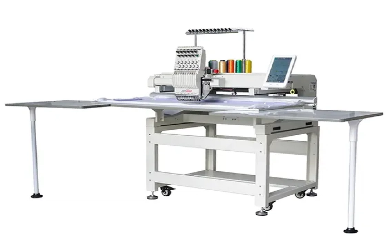
When choosing a commercial embroidery machine, it's essential to research different brands. Well-known brands, such as Brother, Bernina, and ZSK, are often associated with high-quality machines, robust features, and long-lasting durability. However, these brands typically come with a higher price tag. On the other hand, lower-cost options from less established brands may offer more budget-friendly prices but could compromise on machine longevity, customer support, or additional features. Balancing brand reputation with your budget is key to making a smart purchasing decision.
After-sales support is a critical factor when investing in an embroidery machine. Reliable after-sales service, including training, maintenance, and repair services, can significantly impact your machine’s performance and lifespan. A good customer support team can help troubleshoot issues quickly, minimizing downtime. Ensuring the brand offers comprehensive service packages or local service providers can save you time and money in the long run, especially when you require repairs or regular maintenance.
Customer reviews and feedback are valuable resources for evaluating the reliability and performance of an embroidery machine. Look for reviews from businesses similar to yours to understand how the machine performs under real-world conditions. Positive reviews can highlight the machine’s durability, ease of use, and efficiency, while negative reviews may reveal potential issues such as frequent breakdowns or subpar customer service. Reading a range of reviews gives you a clearer picture of what to expect and helps you make an informed decision.
 Tips for Making the Right Decision
Before purchasing a commercial embroidery machine, take time to research and compare different brands and models. Look into features, specifications, and price points, and consider factors like warranty, after-sales support, and customer reviews. Comparing options helps you find the machine that best fits your business needs and budget.
Evaluate your unique business requirements when choosing a machine. Consider the types of products you’ll embroider and the complexity of your designs. A multi-head machine is ideal for high-volume orders, while a single-head machine works better for custom designs. Choose a machine that fits your production scale and design needs.
Testing the machine before purchase is key to ensuring it meets your expectations. Many dealers offer demonstrations where you can assess speed, stitch quality, and ease of use. A hands-on test helps identify potential issues and ensures the machine will perform well for your business.
The number of heads depends on production volume, order size, and budget. Single-head machines are suitable for small businesses or custom orders, while multi-head machines are better for high-volume production, as they allow you to embroider multiple items at once.
Single-head machines are ideal for small-scale, custom work and are more affordable. Multi-head machines are best for larger businesses with high-volume orders, as they increase efficiency by embroidering multiple items simultaneously.
Yes, compatible embroidery software is essential for optimizing designs and ensuring smooth operation. It allows you to create, modify, and transfer designs to the machine, improving productivity and reducing errors.
Regular maintenance is key. Clean the machine, oil moving parts, and check for wear on needles and threads. Follow the manufacturer’s maintenance schedule and use quality consumables to ensure long-lasting performance.
When choosing a commercial embroidery machine, several key factors must be considered, including machine size and capacity, speed, needle configuration, software compatibility, and ongoing maintenance costs. It’s crucial to assess your specific business needs, whether you're focused on custom designs or large-scale production, as this will guide your decision between single-head and multi-head machines. Balancing your budget with these needs is vital—while it may be tempting to go for a lower-cost option, investing in a machine that meets both your current and future requirements can ensure long-term success. By carefully evaluating all aspects, you’ll make a well-informed decision that supports your business growth and enhances production efficiency.


