
close
Choose Your Site
Global
Social Media


Views: 0 Author: Site Editor Publish Time: 2025-10-22 Origin: Site


If you’ve ever admired raised, textured embroidery on caps, logos, or patches, you may be wondering whether a standard home embroidery machine can achieve the same striking 3D look. In this article, we explore 3D embroidery machines and guide hobbyists and small business owners through what’s possible with a regular machine, what requires specialized equipment, and how to make the most of your embroidery projects. We will also provide practical tips and professional insights for creating puff embroidery with your existing equipment.
3D embroidery, also known as puff embroidery, is a technique that creates a raised design on fabric, giving a three-dimensional effect. Unlike traditional flat embroidery, which lies flush with the surface of the material, 3D embroidery stands out, providing a bold, textured look that catches the eye. This technique is widely used in logo embroidery, sportswear, caps, promotional items, and personalized gifts.
Flat embroidery is produced by stitching directly onto the fabric, layer by layer, creating smooth designs that are mostly two-dimensional. In contrast, puff embroidery involves adding a layer of foam or padding under the stitches, allowing the design to rise above the fabric. This results in a sculpted appearance that adds depth and prominence to logos, lettering, or patterns. Flat embroidery is ideal for detailed images and small lettering, while 3D embroidery excels in bold, visually striking designs that require a tactile impact.
To achieve the 3D effect, certain materials and tools are essential:
3D foam: This is the key component for puff embroidery, placed under the stitching to create height. Foam comes in various thicknesses, usually between 1mm to 3mm for hobbyist use, and denser options are available for commercial machines.
Backing stabilizers: Used to support the fabric and prevent distortion during stitching. Heavy-duty cut-away or tear-away stabilizers are preferred for thick foam applications to maintain design integrity.
Special needles: Standard needles may struggle with foam. Using needles designed for thicker materials or embroidery-specific heavy-duty needles ensures smooth stitching without breaking or pulling threads.
Adhesives and tape: Temporary adhesives can help foam stay in place during stitching, preventing shifts and uneven puffing.
Additionally, thread choice can influence the final look. Polyester embroidery threads are commonly used for their strength, sheen, and resistance to heat and fading. High-quality thread ensures the foam remains intact under multiple passes of stitching.
Many hobbyists and small-shop operators wonder whether their consumer-grade embroidery machines can handle 3D projects. The answer is: yes, but with limitations. Standard machines can perform basic puff embroidery using simple techniques, but they may struggle with complex designs, high-density stitching, or curved caps.
Even with a regular home embroidery machine, you can experiment with:
Layering: Multiple layers of thread can create slight raised effects on lettering or simple shapes. This technique requires careful control of stitch density to avoid flattening the foam or overloading the machine.
Thin foam padding: Some designs allow thin foam sheets to be stitched over, giving subtle puff effects without requiring special machinery. Foam under letters, small geometric shapes, or borders works best for this approach.
Digitizing for low height: Adjusting your design to reduce foam thickness can prevent excessive needle strain and improve final results. Many software programs allow you to set foam-specific parameters even for home machines.
Certain techniques demand features that standard home machines usually lack:
Hat/cap embroidery: Requires a curved surface driver to maintain tension and alignment. Regular flat-bed machines struggle with curved surfaces, leading to distortion or misaligned designs.
Higher needle clearance and head lift: Thick foam layers need machines capable of raising the presser foot and needle head adequately. Without sufficient clearance, needles may break or foam may compress unevenly.
Automatic trimming and multi-head stability: For consistent, professional results, commercial machines offer automated trimming and stability across multiple heads—features not found in most consumer machines.
Before upgrading, hobbyists can try:
Testing designs on scrap fabric and thin foam.
Using stabilizers and adhesives to reduce foam shifting.
Digitizing designs with reduced stitch density to prevent needle damage.
Limiting design size and complexity to suit the machine’s capabilities.
Practicing with different foam types to understand how they interact with thread tension and stitch patterns.
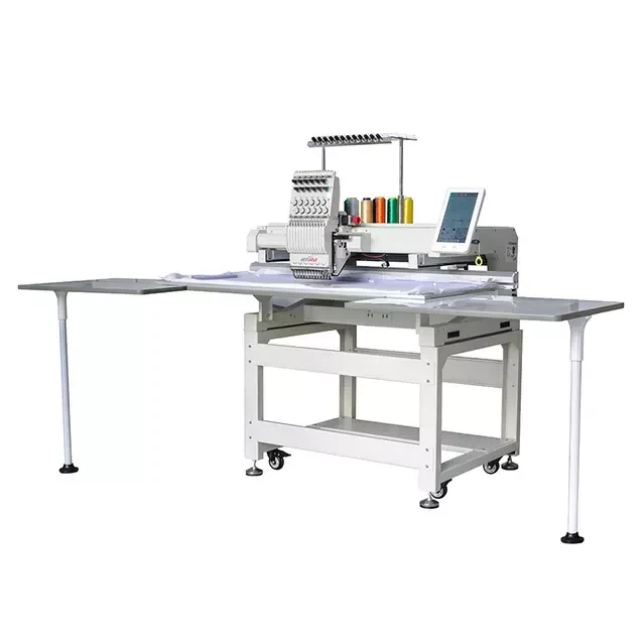
While it is possible to achieve a 3D effect with a standard machine, there are limitations that may affect quality, speed, and precision.
Creating raised embroidery requires digitizing specifically for foam. This includes adjusting stitch density, reducing jump stitches, and accommodating the foam’s thickness. Without proper digitizing, designs may sink, distort, or tear through the foam layer. Even for simple home machines, learning to modify digitized patterns for puff embroidery can dramatically improve results.
Using thick foam or high-density stitching on a home machine increases the risk of:
Foam blowouts: Excessive thread tension can cut or compress the foam.
Needle breakage: Standard needles may not handle the added thickness consistently.
Poor adhesion: Inadequate stabilization can lead to designs that peel off or lose their raised appearance.
Thread shredding: Low-quality thread may fray when passing through dense foam, affecting appearance and longevity.
For businesses or frequent 3D embroidery projects, investing in a dedicated 3D embroidery machine provides several advantages. Commercial machines offer precision, automation, and speed that cannot be matched by home embroidery units.
Commercial machines designed for 3D embroidery often include:
Hat/cap driver: Essential for precise alignment on curved surfaces.
Automatic trimming and multiple heads: Improves efficiency and reduces manual labor.
Head lift and needle clearance adjustment: Allows thicker foam layers without needle stress.
Advanced software for foam digitizing: Programs optimized for raised embroidery ensure accurate stitch placement and reduced errors.
Multi-material capability: Some machines can handle thicker foam, leather, or specialty fabrics consistently.
Upgrading to a computerized 3D embroidery machine ensures:
Consistent quality across large batches.
Reduced design errors and material waste.
Faster turnaround for small businesses needing multiple cap or patch orders.
Professional results that satisfy client expectations and create high-value products.
For small businesses, the ability to produce intricate, raised designs efficiently can be a differentiating factor in competitive markets.
Even if you stick with a home machine, you can achieve impressive results with careful preparation and technique.
Choosing a design: Start with simple, bold letters or geometric shapes. Avoid intricate patterns with high stitch density.
Hooping: Ensure the fabric and stabilizer are taut; any looseness can cause puckering.
Layering: Cut foam slightly smaller than the design outline and place it on the fabric.
Stitching: Use low-density satin stitches and avoid high tension. Test on scrap material first.
Trimming: Carefully cut away excess foam after stitching to maintain shape.
Cleaning up: Remove loose threads, trim edges, and press lightly if needed.
Use firm, smooth foam for even puff effects.
Choose needles specifically suited for foam embroidery.
Digitize designs with foam-specific settings to avoid distortion.
Test thread tension on scrap fabric and foam before final stitching.
Avoid overly small lettering, which may sink or tear through the foam.
Rotate designs to see how stitching interacts with foam height.
Use lighter stabilizers for thin fabrics to prevent distortion.
Consider combining flat and 3D embroidery for mixed textures.
Experiment with color contrasts on foam for enhanced visual impact.
In summary, while a regular home embroidery machine can achieve basic 3D embroidery effects through layering and thin foam techniques, there are clear limitations in precision, density, and speed. Hobbyists can experiment with small designs and thin foam to create subtle raised effects, but for businesses seeking consistent, high-quality results or more complex designs, upgrading to a commercial 3D embroidery machine is the most practical solution. At Zhuji Qihong Electro-Mechanical Co., Ltd., we specialize in high-precision computerized embroidery machines capable of producing professional 3D embroidery, including puff embroidery on caps, fabrics, and promotional items. To explore our advanced models, view sample work, or discuss your specific needs, please contact us today.


