

close
Choose Your Site
Global
Social Media


Views: 0 Author: Site Editor Publish Time: 2026-10-15 Origin: Site


Machine downtime acts as a direct threat to your production capacity. It actively eats away at your daily revenue. You simply cannot view hardware stalls as a minor technical nuisance. Running a multi-needle commercial setup demands precise oversight. You cannot rely on reactive fixes when orders pile up. Success requires predictable, preventative systems working in the background.
Many new shop owners wait for a catastrophic thread break before cleaning their equipment. This reactive mindset ruins profit margins. We must shift our focus toward proactive care. You need a structured plan to protect your hardware investments. This approach guarantees consistent stitch quality across every production run.
We will explore how to transition from ad-hoc cleaning to a professional standard. You will learn how to build daily operator habits. We will cover strict lubrication schedules and digital tracking methods. You will also discover how to evaluate in-house repairs against professional service contracts.
Neglected maintenance triggers a cascade of compounding costs. You often face ruined garments from unexpected oil spots. These mistakes force you to discard expensive blank apparel. You miss critical client deadlines because a rotary hook jammed mid-run. Consequently, you end up paying premium rates for expedited replacement parts. These hidden expenses destroy your profit margins faster than idle periods.
A successful plan completely changes this dynamic. We define success through specific, measurable outcomes. You must maximize the Mean Time Between Failures (MTBF). High MTBF means your equipment runs longer without sudden breakdowns. You also want factory-level tension consistency across every needle. Your ultimate goal remains achieving zero unplanned downtime during peak seasons.
Routine upkeep directly limits internal motor strain. It actively prevents premature rotary hook wear. Lint and dust create immense friction inside moving components. When you eliminate this friction, you protect delicate gears. This diligence extends the functional life of your equipment by several years. Businesses prioritizing daily care rarely replace machines early. They maximize their initial hardware investment through sheer discipline.
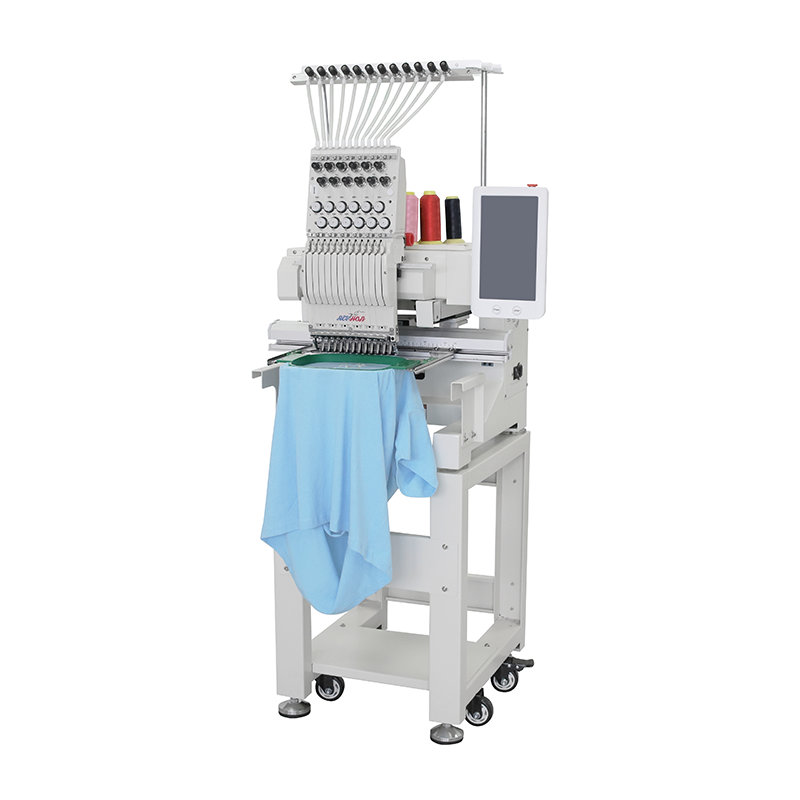
Your baseline maintenance must remain simple. Floor operators must execute these tasks without specialized mechanical training. Complex routines frustrate workers. This frustration leads to skipped steps. You need straightforward checklists to ensure daily compliance.
Daily action items keep the most critical parts functioning smoothly. Operators should perform these tasks before starting the first shift.
Weekly action items require slightly more time. You should schedule these for Friday afternoons or Monday mornings. Deep clean the needle plate thoroughly. Remove the plate and brush out the hidden feed channels. Next, inspect your needles. Replace worn needles before they cause microscopic fabric tearing. Dull needles punch holes instead of parting fabric threads. This ruins delicate performance wear.
Managers must actively watch for "maintenance drift." This phenomenon occurs when operators skip steps during peak production periods. They feel rushed and ignore the daily brush-out. Over time, this negligence becomes the new shop standard. You must enforce the schedule strictly. Make the cleaning time a paid, non-negotiable part of the daily workflow.
Operators frequently misunderstand industrial lubrication. You must understand the technical distinction between oiling and greasing. Oiling utilizes low-viscosity fluids. You apply oil frequently to fast-moving parts. Greasing relies on high-viscosity, thick compounds. You apply grease infrequently to heavy-load gears. Mixing them up causes severe mechanical binding.
| Lubrication Target | Lubricant Type | Application Frequency | Primary Purpose |
|---|---|---|---|
| Rotary Hook Race | Lightweight White Oil | Daily / Every Shift | Prevents thread snapping and hook wear |
| Needle Bars | Medium-Weight Oil | Weekly / Monthly | Maintains smooth vertical plunging |
| Connecting Rods | Medium-Weight Oil | Monthly | Reduces motor strain and friction |
| Color-Change Cams | White Lithium Grease | Quarterly | Ensures precise needle transitions |
| Internal Drive Gears | Heavy-Duty Grease | Bi-Annually | Protects core rotational movement |
The daily oiling matrix demands strict precision. Apply exactly one drop of specialized oil on the rotary hook race. Do this at the start of every shift. A dry hook generates intense heat, snapping threads instantly. For your weekly or monthly routine, oil the needle bars and connecting rods. Base this frequency purely on your run-time hours.
The greasing matrix operates on a longer timeline. Every quarter, apply grease to the color-change cams. Check the internal gears bi-annually. Use a small applicator brush to spread the grease evenly. Never use your bare hands. Skin oils degrade the chemical composition of the grease.
We must address a very common industry pitfall. Many shops suffer from over-oiling. Operators think more oil equals better performance. This is entirely false. Excess oil pools at the bottom of the needle bars. Gravity pulls it down during high-speed runs. It eventually drips directly onto client garments. Oil stains on white polyester polo shirts hit your profit margins hard. Apply only the prescribed amount. Always run a quick test on scrap backing to catch stray droplets.
Scaling a shop brings new operational challenges. When you transition to a larger fleet, informal schedules fail. Managing a single computerized embroidery machine differs vastly from running ten heads simultaneously. You must standardize your approach.
We recommend strict digital tracking. Never rely on calendar days to dictate service intervals. One machine might run sixty hours a week. Another might run only twenty. Calendar-based schedules lead to over-servicing some units and neglecting others. Instead, log run-time hours via the onboard software. Modern control panels track exact stitch counts. Use these digital dashboards to trigger maintenance alerts accurately.
Firmware and software upkeep represent critical tasks. Mechanical parts capture all the attention, but software drives the hardware. You must install manufacturer software updates promptly. These updates often optimize motor efficiency and refine needle timing. Perform digital calibration resets monthly. Additionally, back up your custom design parameters to an external drive. Many operators overlook these digital steps. Losing your customized tension settings during a power surge ruins days of production.
Every growing shop eventually faces a difficult choice. You must decide when to handle repairs internally versus outsourcing to certified technicians. Providing structured commercial embroidery machine maintenance becomes complex as you add more needles. We use a clear evaluation framework to make this decision.
First, define your in-house limits strictly. Your floor operators should handle daily cleaning, needle swaps, and surface lubrication. They handle the visible, easily accessible components. However, technicians should handle internal timing adjustments. They manage main motor belt tensioning and complex diagnostic error codes. Do not let untrained staff open the main motor housing. They often cause more damage than they fix.
When evaluating professional Commercial Maintenance Plans (CMPs), look for specific contract inclusions. You need a rock-solid Service Level Agreement (SLA). This SLA must guarantee rapid response times during your peak holiday seasons. The contract should also include an annual "deep dive" preventive tune-up. During this tune-up, the technician strips the machine down and recalibrates all internal timings. Finally, demand transparent pricing. You need clear rates for travel, hourly labor, and OEM (Original Equipment Manufacturer) parts.
Use simple shortlisting logic to justify this expense. Audit your current downtime costs. Calculate the revenue lost during your last major breakdown. Add the cost of expedited shipping for replacement parts. Add the overtime pay required to catch up on delayed orders. Compare this total figure against the annual premium of a professional maintenance tier. In almost every high-volume shop, the professional plan pays for itself within one incident.
Commercial embroidery upkeep serves as a foundational business process. It is never an optional chore or an afterthought. Predictable routines protect your hardware and secure your production timelines. Strict lubrication schedules prevent catastrophic part failures and garment damage. Transitioning to digital tracking ensures you service your fleet based on reality, not guesswork.
Take immediate action this week. Audit your current maintenance logs today. If they look inconsistent, establish a standardized, written schedule by tomorrow morning. Train your operators on the exact difference between daily oiling and quarterly greasing.
Do not wait for a breakdown to build a relationship with a technician. Explore professional Commercial Maintenance Plans right now. Request a certified technician audit for your oldest machines. You can also start by downloading a printable 15-needle maintenance checklist and attaching it to every machine on your floor.
A: You should schedule professional servicing based on actual run-hours. Typically, a machine requires a certified technician every 1,500 to 2,000 hours of operation. For standard shifts, this equals an annual deep-dive inspection. High-volume shops running double shifts may need professional calibration every six months.
A: The most frequent culprit is lint buildup inside the bobbin case. Excess dust creates severe tension spikes. Additionally, microscopic burrs on the needle plate snag the thread during high-speed runs. Regular brushing and polishing prevent these common issues.
A: No, you should avoid standard household lubricants. Multi-needle machines require specific viscosities to handle extreme heat and friction. Always use a lightweight white mineral oil designed specifically for industrial rotary hooks. Standard sewing oil can gum up internal bearings over time.
A: We suggest attaching a physical sign-off sheet directly to each machine stand. Operators must initial the sheet after completing their morning brush-out. For deeper servicing intervals, utilize the computerized embroidery machine internal stitch-count dashboard to trigger automated digital alerts.


