

close
Choose Your Site
Global
Social Media


Views: 0 Author: Site Editor Publish Time: 2026-09-26 Origin: Site


Let us face the not-so-exciting reality of commercial embroidery. Scaling up your production capacity introduces exponential maintenance complexity. You cannot simply buy a larger machine and expect to treat it like a hobbyist model. The leap from a single-needle to a multi-needle setup requires a fundamental shift in operations. You must transition from reactive fixing to proactive, schedule-based maintenance.
Why does this matter? Preventative care directly determines your output quality. It also dictates your equipment longevity. Ignoring these protocols leads to frequent breakdowns. It causes thread breaks, birdnesting, and ruined garments. You lose money every minute your equipment sits idle.
We will outline the specific maintenance protocols required for higher capacity machines. You will learn how to structure your daily and weekly checklists. We will explain how to evaluate hardware durability effectively. Finally, we will show you how to vet equipment before making your next big purchasing decision.
Maintenance protocols scale directly with your embroidery machine needle count; a 15-needle machine requires distinct tension and lubrication SOPs compared to entry-level models.
Preventative maintenance directly determines output quality and equipment longevity, reducing the risk of catastrophic downtime.
When evaluating commercial equipment, specific embroidery machine needle count specifications (like automated oiling systems) should factor heavily into your equipment evaluation.
Partnering with a reliable embroidery machine needle count supplier ensures rapid access to replacement parts and technical support, mitigating operational bottlenecks.
Moving to 4, 6, 12, or 15 needles multiplies your baseline tasks significantly. More needles mean more moving parts to monitor. You have more thread paths to clean daily. You must calibrate more tensioners regularly. You also have more needles to replace when they dull. A high capacity machine requires dedicated attention. Operators often underestimate this multiplier effect. They assume the machine simply works faster. In reality, it works harder. Each added needle introduces another potential failure point. You must manage these points through strict discipline.
High-speed continuous runs place immense friction on your rotary hook assembly. Commercial usage dwarfs hobbyist strain. Multi-needle machines run non-stop for hours on end. This constant motion generates significant heat. It creates extreme wear on the hook tip and bobbin case. You must keep this area meticulously clean. Friction degrades metal over time. Proper lubrication reduces this friction. However, you must apply the right amount of oil. Too little oil causes the hook to overheat and seize. Too much oil ruins your garments.
Lint and thread dust build up rapidly during commercial runs. Polyester thread sheds micro-fibers constantly. These fibers drift down into the rotary hook assembly. They mix with sewing oil to create a thick sludge. This happens even faster in higher capacity machines. Dust can seize mechanical parts quickly. You must clear it routinely. Left unchecked, lint absorbs vital lubricants. It starves the bearings of oil. This leads to premature part failure. Keeping the thread path clear is your first line of defense.
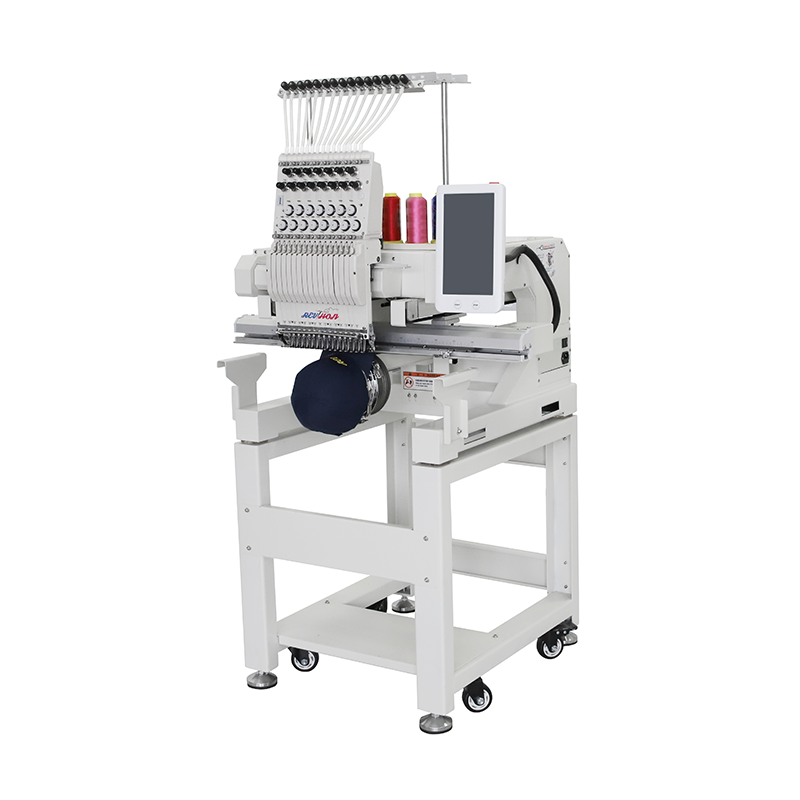
You need strict end-of-shift habits. Operators must complete these tasks before leaving. Routine daily care prevents major weekly issues.
Remove the bobbin case from the rotary hook assembly.
Use a small brush to sweep out accumulated lint.
Blow out the hook area safely using compressed air. Hold the nozzle at an angle. Do not blast air directly into the bearings.
Visually inspect the entire thread path. Look for lint snags around the tension discs.
Wipe down the machine exterior to prevent dust settling.
Weekly tasks require more precision. You must dedicate time to specific calibration steps. Lubricate the race and rotary hook weekly. Be very careful here. Apply only one small drop of oil. Over-oiling causes severe garment staining. Always test your upper and bobbin thread tensions. Run an "H-test" or "I-test" across all active needles. Digitize a block capital "H" or "I". Sew it out on scrap fabric. Flip the garment over. You want to see one-third bobbin thread down the center. You want two-thirds top thread on the edges. Adjust your tensioners accordingly.
Monthly maintenance requires a deeper mechanical focus. You should grease the color change cam thoroughly. Lubricate the needle bar driving mechanisms. These parts control the intricate movements of the head. Check your OEM manual carefully. It details specific long-term lubrication points. Follow these guidelines exactly. Skipping quarterly maintenance leads to stiff needle bars. It causes sluggish color changes. These issues slow down your entire production line.
Frequency | Task Description | Critical Focus Area | Tools Required |
|---|---|---|---|
Daily | Clear lint and dust from bobbin area. | Rotary hook assembly | Small brush, compressed air |
Weekly | Test thread tensions and oil rotary hook. | Tension discs, hook race | White sewing oil, scrap fabric |
Monthly | Grease color change cams and needle bars. | Upper mechanical head | Lithium grease, Allen wrenches |
Quarterly | Check timing and inspect reciprocators. | Drive shafts, reciprocator blocks | Timing gauge, screwdrivers |
Many brands claim their machines are maintenance-free. Evaluate these claims carefully when looking at an advanced embroidery technology embroidery machine. Automated oiling systems do work well. They distribute oil to key areas automatically. They push lubricant to the needle bars and drive shafts. However, they have limits. They do not oil the rotary hook. You must still perform manual checks. Sensors can fail. Tubes can clog. You should verify oil levels visually. Never rely entirely on automation for hardware longevity.
Enclosed cams protect vital components. They keep thread dust away from moving parts. This drastically reduces your deep cleaning frequency. Exposed cams gather lint quickly. The lint mixes with grease to form a sticky paste. This paste causes mechanical jams during complex color shifts. Enclosed systems prevent this contamination. They keep the grease clean. They ensure smooth needle transitions. Look for enclosed housings when comparing machine models. They save hours of frustrating maintenance.
You want easy access to the bobbin area. You also need quick access to needle bars. This is a critical metric when shortlisting any embroidery machine. Toolless access saves time. Magnetic panels or quick-release levers are ideal. Operators are more likely to clean a machine if access is easy. If they need screwdrivers to remove covers, they will skip the task. Removing barriers improves maintenance compliance. It keeps your production floor moving efficiently.
Proprietary parts pose a massive business risk. If a unique part breaks, your machine stops. You cannot afford to wait weeks for overseas shipping. A trustworthy supplier maintains ample inventory domestically. They should offer rapid shipping for all consumables. You need reciprocators, rotary hooks, and needle bars fast. Ask about their inventory policies before buying. Demand guarantees on lead times. Your business depends on their supply chain efficiency.
Assess the supplier's technical support carefully. Do they offer robust documentation? Look for clear manuals and diagrams. Video troubleshooting guides are incredibly valuable. They help operators fix minor issues quickly. Localized technician networks are also vital. Can they send a technician to your shop? Phone support only goes so far. Robust support infrastructure mitigates major bottlenecks. It gets your machines running again.
Clarify what the supplier actually covers. True hardware failure falls under warranty. Standard maintenance neglect does not. Understand the difference before signing a contract. Read the fine print carefully. Wear-and-tear items are rarely covered. Rotary hooks, needles, and tension springs degrade naturally. You must pay to replace them. Do not assume a warranty covers poor operator habits. Ask specific questions about component coverage.
Do not view maintenance as lost production time. Frame it as vital insurance. It protects against catastrophic failure. Breakdowns during peak fulfillment seasons destroy profits. Imagine losing a machine in mid-December. The cost of missed deadlines is massive. Proactive care ensures continuous revenue flow. Fifteen minutes of daily cleaning saves days of lost output. Train your staff to prioritize maintenance. It is the most profitable task they perform.
Poor maintenance ruins garments. Dull needles puncture fabric aggressively. They cause puckering and tearing. Worn tension discs lead to frequent thread breaks. Your operators waste time re-threading needles constantly. Birdnesting destroys backing and ruins expensive blank apparel. These issues directly impact your profit margins. Clients will reject sloppy embroidery. High-quality output requires perfectly tuned hardware. You cannot achieve tight registrations on a neglected machine.
Balance your desired capacity with your team's skills. Can your staff actually maintain the equipment? Do not buy based solely on needle count. Consider the real-world maintenance burden. A 15-needle machine is useless if it constantly jams. Evaluate the user interface. Check the accessibility of common wear parts. Build a realistic maintenance schedule before purchasing. Ensure your team can execute it consistently.
Prioritize easy access to the rotary hook.
Look for simple tension calibration systems.
Verify the supplier stocks consumable parts locally.
Check for clear error codes on the control panel.
High needle counts offer superior efficiency. They allow you to process complex multi-color designs rapidly. However, they demand rigorous, disciplined maintenance. You cannot cut corners on daily cleaning. Weekly calibration is mandatory for quality control.
Do not just buy based on the number of needles. Buy based on the machine's maintenance accessibility. Buy based on the supplier's parts ecosystem. Ensure you have the support needed to keep the equipment running.
Before you sign a purchase order, take action. Request comprehensive maintenance schedules from your shortlisted vendors. Get parts-availability guarantees in writing. Ask to see their service level agreements. Protect your business by demanding transparency upfront.
A: The standard industry baseline recommends changing needles every 2 to 3 million stitches. You should also change them immediately if thread breaks suddenly increase. Dull needles damage fabric and cause fraying. It is best to swap all heavily used needles at once to maintain consistent tension across the head.
A: You must use highly refined, clear or white sewing machine oil. Check the specific viscosity requirements in your manual. Warn your staff against using heavy lubricants or automotive oils. Heavy oils attract excessive thread dust. This creates a thick sludge that will seize your rotary hook and ruin garments.
A: Start with a quick diagnostic hierarchy. First, check the needle insertion angle. The eye must face forward correctly. Second, test your bobbin tension. A loose bobbin causes looping and dropped stitches. Finally, verify your rotary hook timing. If the hook arrives too late, it will miss the top thread loop entirely.
A: Focus strictly on guaranteed response times. You need quick access to technical support during business hours. Highlight the lead times for critical replacement parts. Ensure they guarantee rapid shipping for mainboards, color change motors, and rotary hooks. Slow part delivery will cripple your production timeline.


